

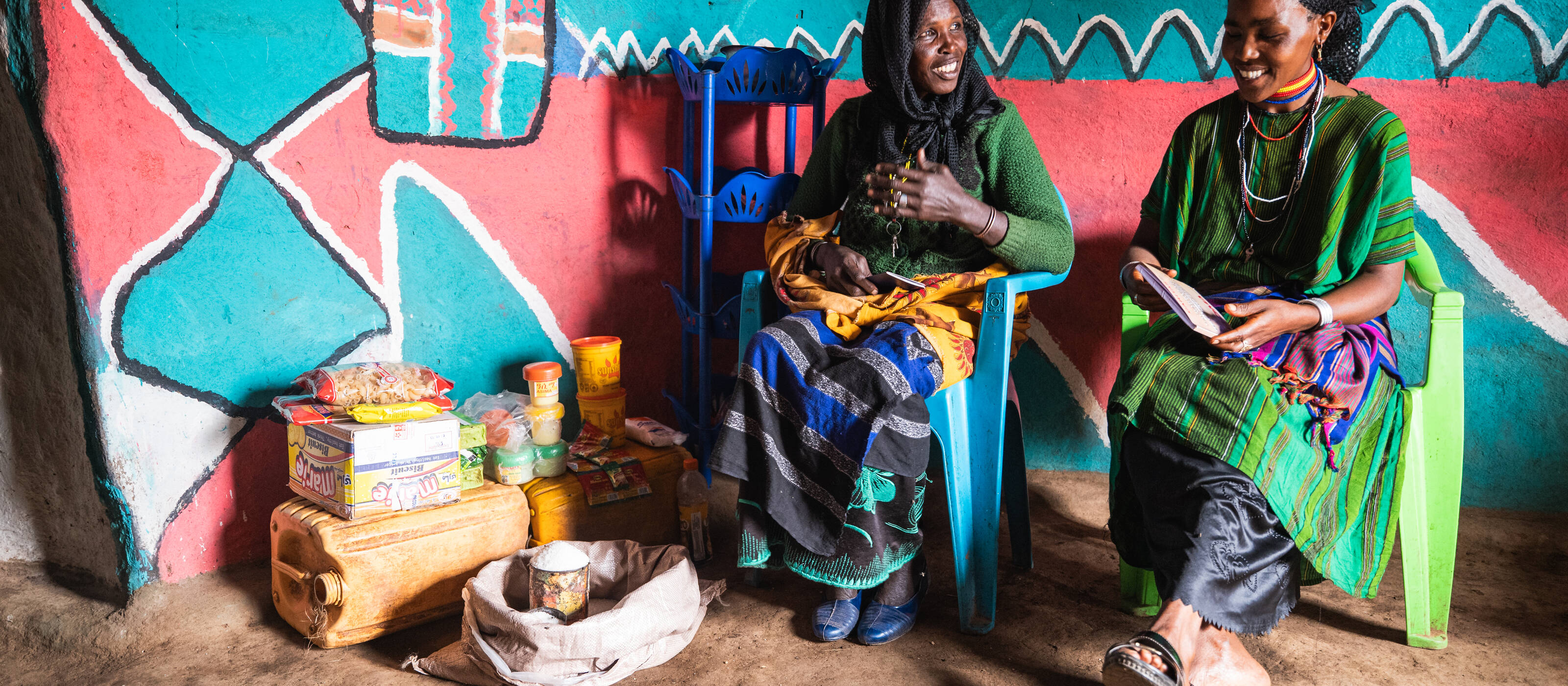
Strengthening of entrepreneurship and market integration to lift vulnerable households out of extreme povertyfinished
Overview
Income and migration
1'542'023 Swiss francs
01.07.2022 - 31.12.2024
Ethiopia, Oromia Region, Borana Zone
3’000 people affected by extreme poverty in rural areas in southern Ethiopia, with the focus on women. Their approx. 18’000 family members also benefit from the project.
P220043
Project in detail
With more than 112 million people, Ethiopia is the second most populated country in Africa. At the same time, Ethiopia is one of the poorest countries with a per capita income of 850 dollar, though its economy records the fastest growth in the region. Added to this is a strong dependence on climatic conditions, because in the rural areas, agriculture remains the main source of income for up to 80 per cent of the population. In particular the rural areas populated by pastoralist and agro-pastoralist communities in southern Ethiopia face complex challenges.
The region records the lowest socio-economic values in the country in many spheres. They include gender equality, literacy rates, access to education, water and food security.
While the negative effects of Covid-19 and climate change can be felt in all communities in the region, women and young people are disproportionately strongly affected. Even before the pandemic, poverty was particularly great in households headed by women, which make up a quarter of all households. Although women make a vital contribution to the livelihood of pastoral households, they have almost no access to information and financial services and only limited control over resources.
The aim of this longer-term project is to support women and households in pastoral and agro-pastoral communities in southern Ethiopia to escape from extreme poverty and become more resilient. In this process, women will play a greater role in their households and communities in the longer term.
To counteract extreme poverty and the financial exclusion of women and young people in pastoral and agro-pastoral communities, the project builds on the «Graduation Approach», adapted to the Ethiopian context which consists of six holistic and sequenced steps:
- Participative selection of the 3’000 participants and setting up of business groups based on a detailed market study;
- Development of different competences in tailor-made training sessions;
- Coaching/Mentoring: Continuous coaching in the development and implementation of individual graduation plans and support of the business groups;
- Start-up capital is provided;
- Access to formal or informal financial services and setting up of savings groups in order to strengthen resilience to market shocks and as a means of autonomous risk management;
- Market access is ensured as widely as possible.
At the start and the end of the project, a survey is conducted among all participants about the standard of living (SOLI) in which demographic data, income, savings, expenses, schooling of children and the household’s food security are recorded. Similar projects that were implemented by the partner organisation The BOMA Project in Kenya found that at the end of the project, household income had increased by 29,64 per cent and savings by 1’969 per cent.
The current project operates under the two themes of income and migration and builds on the graduation approach. The graduation approach is a graduated, time-limited package of services for households which combines social protection, income development and financial integration. It is a targeted intervention designed to lift households out of extreme poverty through a range of activities in different fields. Graduation is located at the interface between humanitarian aid and development cooperation (HD Nexus).
The beneficiaries of the project are selected and registered by means of a strictly defined selection procedure and by a committee specially set up for this purpose. The broad-based, active participation of the relevant government offices, financial institutions and private actors strengthens the longer-term impact of the intervention.
Further projects Commitment to a world without poverty

The project is funded by:
- The BOMA Project
Header image: © Ayaana Publishing