

Knowledge and Quality Management (KQM) for International Cooperation
Every Caritas Switzerland project generates valuable knowledge. By capturing insights, sharing and applying these, we can improve the quality and impact of our work across countries and programmes.
The Knowledge and Quality Management (KQM) team strengthens thematic knowledge, promotes evidence-informed programming and creates opportunities for colleagues to learn from one another. Through knowledge sharing and cross-country collaboration, we help ensure that lessons learned in one context can benefit projects around the world.
What is Knowledge and Quality Management in International Cooperation?
Knowledge and Quality Management (KQM) helps Caritas Switzerland transform knowledge and experience into better development and humanitarian practice. We support colleagues by:
- Capturing lessons learned and good practices from projects.
- Developing technical guidance, standards and practical tools.
- Providing technical advice for proposal development and ongoing programmes.
- Supporting monitoring, evaluation, accountability and learning (MEAL).
- Connecting Caritas Switzerland with international evidence bases, networks and emerging practices.
What does the Knowledge and Quality Management team do?
We combine classical knowledge and quality management tasks with facilitating knowledge exchange and partnership building to build collective sector intelligence, namely by:
- Facilitating cross-country technical advisory services in areas such as Market Systems Development, Climate Mainstreaming, Cash and Voucher Assistance, Vocational Skills Development, Private Sector Engagement and the Graduation approach.
- Engaging country office practitioners in organisational knowledge development through the KQM Fellowship, ensuring that implementation experience informs technical guidance.
- Building partnerships with research institutions, private sector organisations and international thematic platforms to strengthen innovation, evidence generation and collaborative programming.
- Bringing together evidence and lessons learned from Caritas Switzerland projects to create and contribute to multi-organisational publications and global thematic discussions.
The Impact of Knowledge and Quality Management
Knowledge and Quality Management (KQM) helps strengthen programme quality by connecting expertise, generating evidence and fostering collaboration across Caritas Switzerland and beyond. By making knowledge accessible and actionable, we enable better decision-making and more effective programming across all country offices. Knowledge and Quality Management helps Caritas Switzerland to:
- act more efficiently (e.g. via templates, guidance, connect country programmes)
- become more effective (e.g. evidence-based Project Cycle Management, ToCs, toolboxes and minimum standards)
- enhance capacity for innovation (e.g. best practices ready for scaling, learning events)
Knowledge and Quality Management at Caritas Switzerland
Knowledge is most valuable when it is shared and applied. bKQM combines two complementary roles:
Developing organisational guidance, strengthening thematic approaches and ensuring that evidence and field experience shape our programming.
Creating opportunities for colleagues to exchange experiences, ask questions, solve problems together and build on each other's expertise.
By connecting people, knowledge and practice, KQM helps strengthen collaboration, innovation and programme quality across Caritas Switzerland.
Caritas Switzerland's Thematic Technical Teams bring together experienced practitioners from country offices and headquarters, specialising in specific thematic areas. They ensure that our technical approaches are grounded in field experience and continuously improved through collaboration. The teams:
- Bring together thematic experts with hands-on implementation experience from different country offices.
- Provide technical advice and peer support to projects across the organisation.
- Review concepts, proposals and approaches to strengthen programme quality.
- Connect global evidence with practical experience from the field.
Communities of Practice (CoPs) are global learning networks where colleagues working in the same thematic area exchange knowledge, experiences and resources. Communities of Practice:
- Provide a space for colleagues to ask questions and discuss implementation challenges.
- Enable members to share useful tools, publications, events and pother networking opportunities.
- Connect knowledge managers, technical experts, MEAL experts and programme staff working on similar topics.
«Learning is not simply about collecting lessons learned. It is about understanding why an approach worked in one context, adapting it to another, and creating opportunities for colleagues to build on each other's experience.»Vielaba AbastoflorProgram Development & Knowledge Management Office in Bolivia
Further Information and Resources on Knowledge and Quality Management (KQM)
Our KQM Point of Contact
Sibylle Studer
Head of Unit Knowledge & Quality ManagementCaritas SwitzerlandSchweiz
Our KQM Experts

Maciej Chmielewski
Senior Advisor and Knowledge Manager Income & LivelihoodsCaritas SwitzerlandSwitzerland
+41 41 419 23 71mchmielewski@caritas.ch


Sarah Estermann
Senior Advisor and Knowledge Manager MigrationCaritas SwitzerlandSwitzerland
+41 41 419 23 28sestermann@caritas.ch
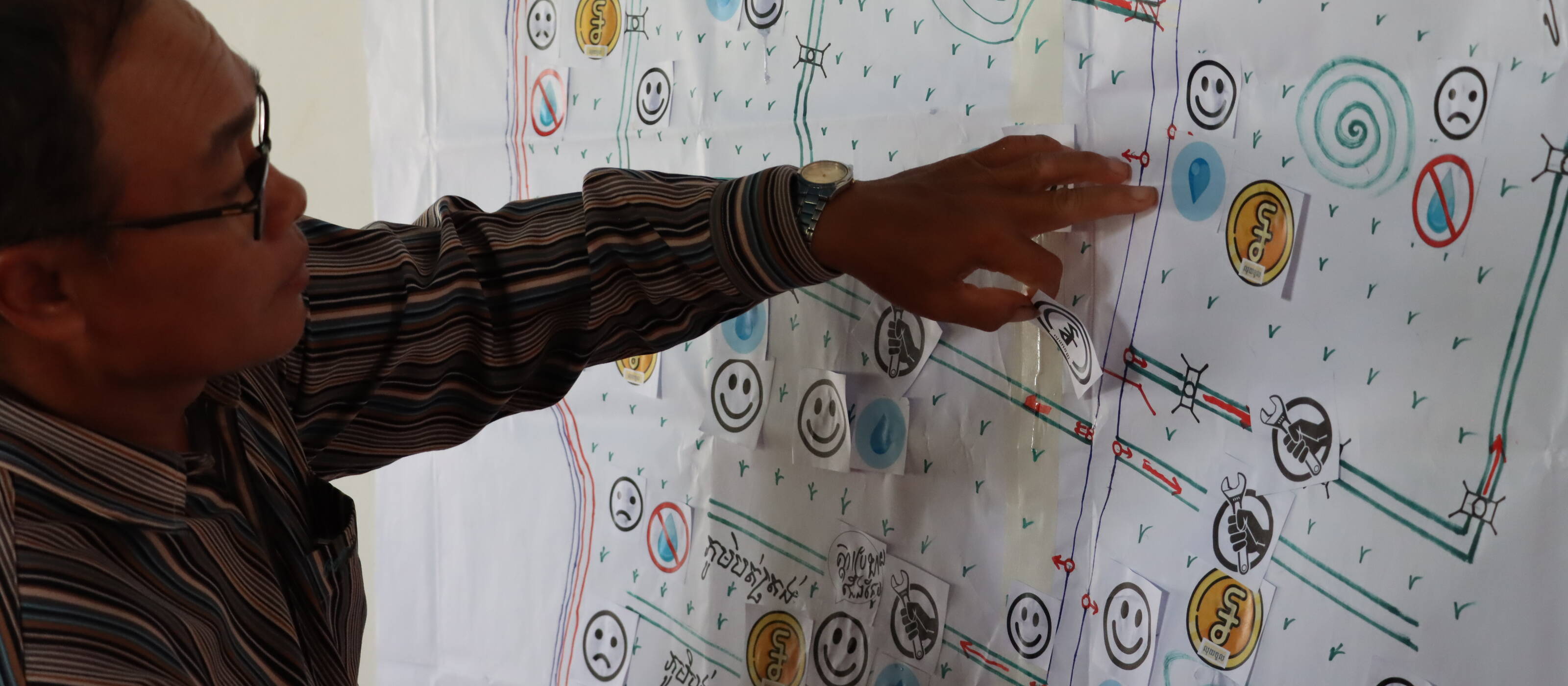
Header image: Cambodia, 2023, IM-Toolbox Workshop for fair water usage in the Banteay Menachey Province, Mongkol Borey District © Nicolas Honoré