

Vocational Skills Development (VSD): Sustainable Livelihoods and Ready Workforces
People affected by poverty, displacement or exclusion often face major barriers to education, recognised qualifications and decent work. Caritas Switzerland’s Vocational Skills Development (VSD) approach helps adolescents and adults acquire relevant technical, entrepreneurial and life skills so they can enter employment, improve their livelihoods or build viable businesses. We work with training providers, employers, public institutions and communities to ensure that skills development is inclusive, recognised and connected to real opportunities in the labour market.
What is Vocational Skills Development?
Vocational Skills Development (VSD) equips people with the practical and transferable skills needed to earn a living and participate in the economy. It includes occupation-specific training as well as foundational competencies such as literacy, numeracy, digital skills, financial literacy, communication, job-search skills and entrepreneurship. VSD goes beyond delivering courses: it links training to recognised certification, employment services, employers, finance and markets so that participants can translate learning into sustainable income and greater self-reliance.
How does Caritas Switzerland promote Vocational Skills Development?
Caritas Switzerland designs VSD interventions around the needs and aspirations of participants and the demand of local labour markets. Our approach includes:
- Assessing labour-market demand and identifying occupations with realistic employment or self-employment potential.
- Working with vocational schools, colleges and training centres to improve the relevance and quality of training.
- Supporting nationally recognised curricula, assessment and certification wherever possible.
- Combining technical training with life skills, financial literacy, digital competencies and entrepreneurship.
- Building partnerships with employers for curriculum input, workplace learning, internships, apprenticeships and recruitment.
- Providing tailored guidance and support to help women, young people, displaced people and other excluded groups participate and complete training.
Why must skills development be linked to the labour market?
Training only creates lasting value when the skills taught are relevant to economic demand. Caritas Switzerland therefore works with employers, business associations, public employment services and local authorities to identify skills gaps and improve the transition from training to work. Depending on the context, participants may receive career guidance, job-placement support, internships, apprenticeships, coaching, access to finance or connections to markets and business-development services.
How does VSD support entrepreneurship and self-employment?
In many contexts, formal jobs are limited and self-employment is an important livelihood pathway. Caritas Switzerland integrates entrepreneurship and financial capabilities into VSD so participants can assess opportunities, plan and manage a business, understand costs and cash flow, reach customers and manage risk. Where appropriate, training is complemented by mentoring, incubation, savings or financial services, start-up support and links to suppliers and buyers.
Who does Caritas Switzerland work with?
Sustainable skills systems depend on cooperation among many actors. Caritas Switzerland works with public and private training providers, ministries and local authorities, employers, chambers of commerce, business associations, employment centres, financial institutions and civil-society organisations. These partnerships help align training standards, strengthen institutions, mobilise expertise and create clearer pathways from education to decent work.
Caritas Switzerland's Approach to Developing Labour Market Skills
- Labour-market relevance and clear pathways to employment or self-employment
- Inclusive access for women, youth, displaced people and marginalised groups
- Quality training and recognised standards or certification
- Partnership with training institutions, employers and public authorities
- Integration of technical, life, digital, financial and entrepreneurial skills
- Sustainable systems, local ownership and continuous learning
Caritas Switzerland’s experience in practice
Caritas Switzerland has implemented vocational education, employability and entrepreneurship programmes in a range of fragile and developing contexts. In Ethiopia, the EnJOY project worked with job-seeking youth and women, technical and vocational training providers, employment centres and microfinance institutions to improve employability and job opportunities. In Chad, Caritas Switzerland supported better vocational training for thousands of adolescents and young adults, with a strong focus on girls and young women. In Cambodia, the Youth Connection initiative linked awareness on safe migration with access to education and vocational training for vulnerable young people. Across these experiences, VSD is combined with institutional strengthening, private sector engagement and support for the transition into work.
How VSD Works in Practice



More Information and Resources on Vocational Skills Development (VSD)
Our VSD Experts
Frequently Asked Questions (FAQ) about Vocational Skills Development (VSD)
VSD is broader than a training course. It combines technical learning with recognised qualifications, life and business skills, career support and links to employers, finance and markets.
Target groups vary by context and may include young people, women, displaced people, migrants, school dropouts, people with disabilities and adults seeking better employment or self-employment opportunities.
They are selected through labour-market analysis, consultation with employers and participants, and an assessment of realistic opportunities for decent employment or viable enterprise.
Success is assessed through indicators such as course completion, recognised certification, transition into employment or self-employment, income improvements, job quality and the strengthened capacity of training and labour-market institutions.
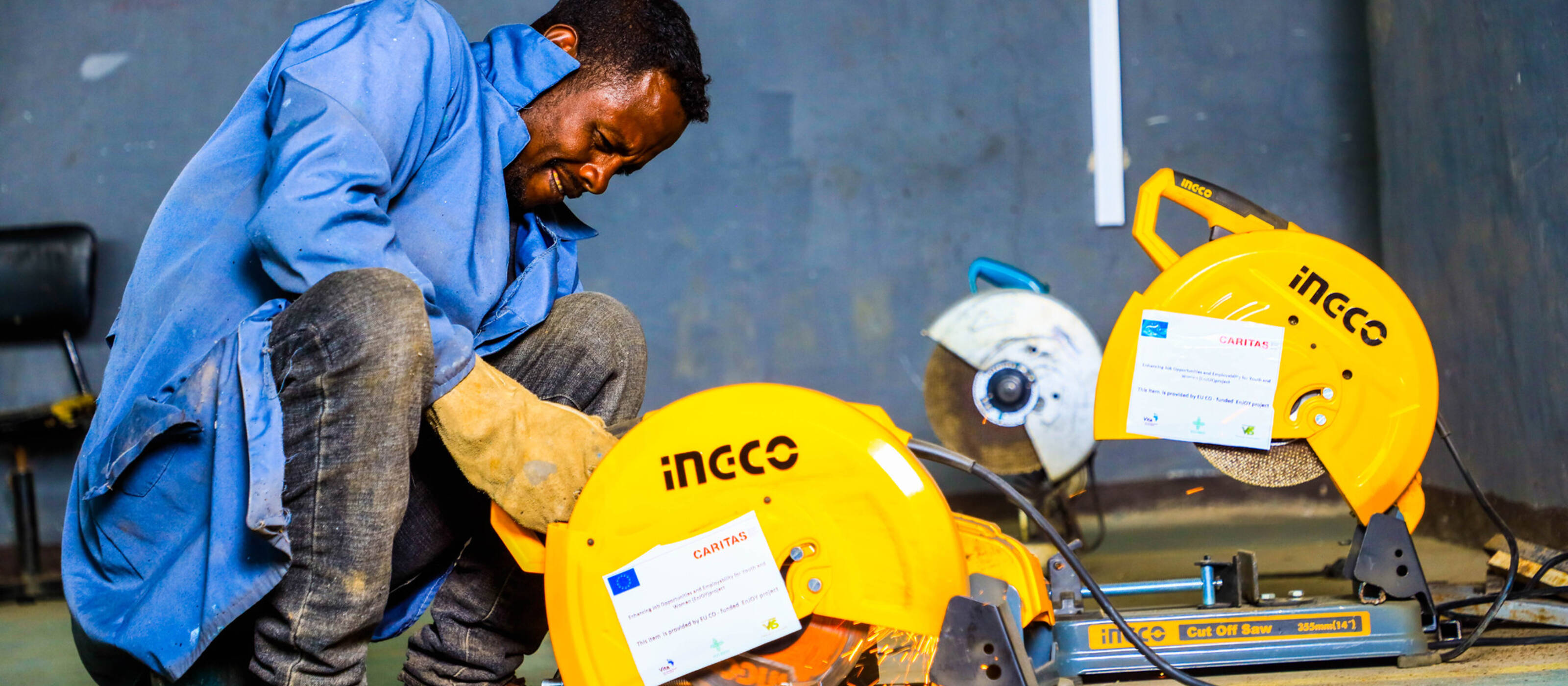
Header image: Ethiopia, 2022, project «EnJOY - Enhancing Job Opportunities and Employability for Youth and Women» © Climax Production