

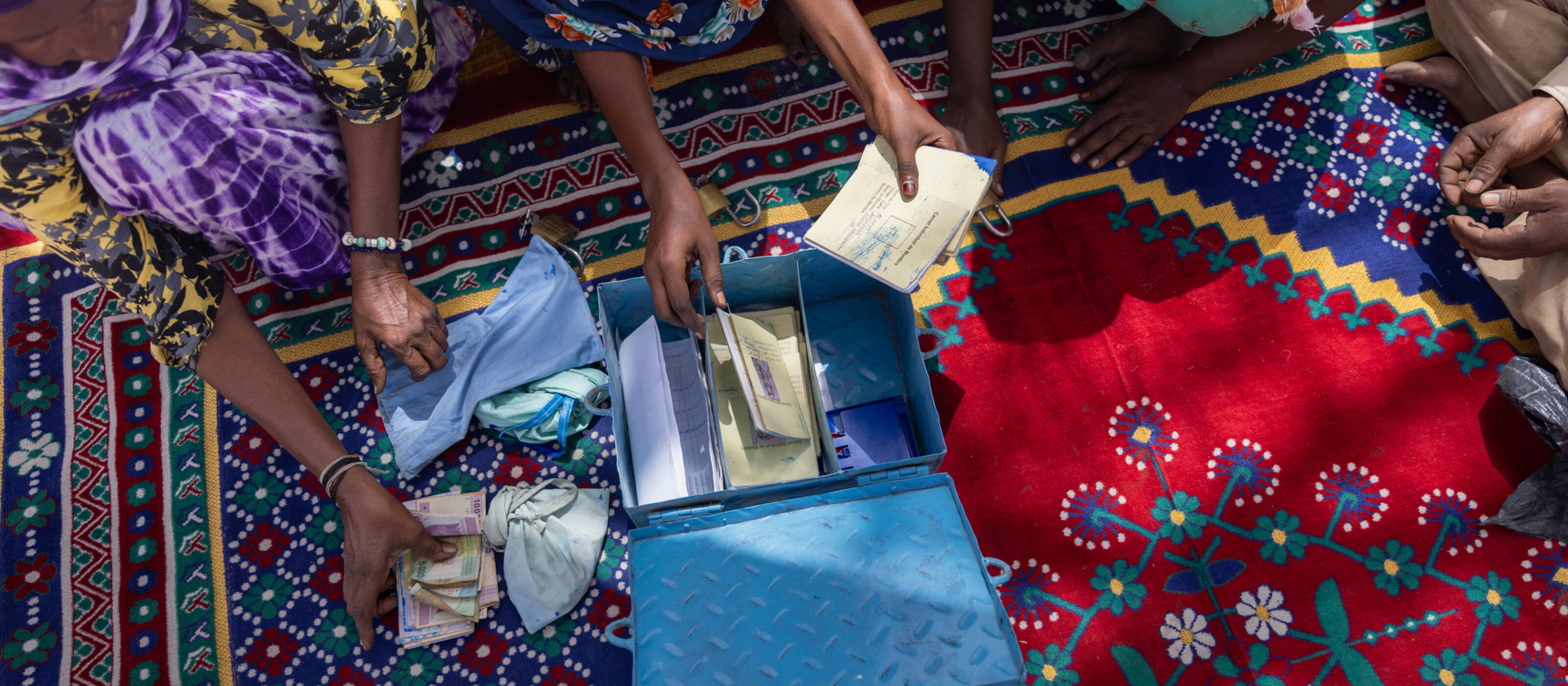
Cash and Voucher Assistance (CVA): Money in the Hands of People in Crisis
Cash and Voucher Assistance (CVA) is a type of humanitarian aid where cash or vouchers are given to people affected by crises. Unlike material assistance such as food or blankets, it allows people to buy goods and services for themselves, based on their own needs and preferences - one family may need medicine for a sick grandparent, another to cover the rent in their temporary apartment. It gives people in a crisis the dignity to choose what they need most to better provide for themselves and their families.
Caritas Switzerland is committed to enhancing the application of Cash and Voucher Assistance (CVA) and to strengthening its own systems and delivery mechanisms and those of its partners, so that assistance is delivered as effectively, efficiently and with as much dignity as possible.
What is Cash and Voucher Assistance (CVA)?
CVA covers two main forms of support:
- Cash is physical or digital money given to individuals, households or communities - an unrestricted form of aid, as people can use it to buy whatever goods or services they need.
- Vouchers are paper or electronic tokens exchanged for a set value or amount of goods, or for specific services; they are more restricted, as they can only be used with selected vendors and often have a time limit.
Either form of support can be made conditional, requiring recipients to carry out an activity such as attending a health screening or sending their children to school, or unconditional, with no requirements attached, meaning people receive the assistance without having to do something in return.
How does Caritas Switzerland use Cash and Voucher Assistance?
Cash-based programming has been explicitly included in Caritas Switzerland's International Cooperation Strategy 2025-2028 as a focus for humanitarian interventions. Our approach includes:
- Detailed needs and market assessments before any transfer is designed
- Direct cash, vouchers or multi-purpose cash grants, depending on beneficiary needs
- Monitoring of markets and of effects on different recipient groups over time
What are the main types of CVA?
Depending on needs of the affected population, the market situation and the capacities of the implementing partner, different typesof CVA can be used. The most common are:
- Multi-Purpose Cash Grants: unrestricted, unconditional cash to cover a household's basic needs
- Vouchers: restricted support exchanged with vendors for specific goods or services, such as seed kits
- Cash for Work: short-term paid work restoring shared infrastructure, benefiting the wider community
- Group Cash Transfers: conditional grants given to grassroots community groups to implement their own initiatives
- Combinations of these modalities tailored to context, market capacity and the needs of different groups within a community
How does Caritas Switzerland decide which type of CVA to use?
The application of cash modalities must follow detailed needs and market assessments, as well as a response options analysis. Only where local markets are functional and the affected population has access to them is an appropriate and fair coverage of needs possible. Caritas Switzerland tailors its response to the individual context, beneficiary needs and partners' capacities, rather than applying a single modality everywhere.
Caritas Switzerland is currently strengthening its systems and delivery mechanisms, and those of its partners, step by step, in order to apply Cash and Voucher Assistance more consistently and effectively.
An effective cash response depends on more than the transfer itself. Our approach to CVA is based on five pillars. Our Principles for Cash and Voucher Assistance:
- Market-Based Response
- Assessment-Led Programming
- Choice and Dignity
- Strengthened Systems and Delivery Mechanisms
- Monitoring and Learning
How CVA Works in Practice


Further Information and Resources on Cash and Voucher Assistance (CVA)
Our CVA Expert


Frequently Asked Questions (FAQ) about Cash and Voucher Assistance
CVA means giving people cash or vouchers instead of goods, so they can meet their own needs directly from local markets. Isn't cash riskier than in-kind aid?
Studies show that the risk of corruption or misuse is no greater than for other forms of assistance, as long as the usual safeguards are applied. Cash transfers are very traceable as most of the transfers are digital, leaving a paper trail and making it hard to misuse.
Research has found that cash directly provided to beneficiaries does not increase the purchase of unintended goods such as alcohol or tobacco. Evidence shows that cash recipients frequently invest in their future, such as setting up a business.
Market assessments are used to ensure that the market has the goods that people would want. Evidence shows that CVA boosts local markets with people spending money locally and thereby stimulating further investments.
By contrast in-kind aid can disrupt the local market by introducing competing free supplies.
Header image: Tchad, 2024, project «Strengthening Resilience and Food Security Among Vulnerable Populations» © Reto Albertalli