

Self-reliance for Venezuelan migrantsfinished
Overview
Migration, Income, Humanitarian Aid
2'000'000 Swiss francs
01.04.2023 - 31.03.2025
Colombia (Bogota); Brazil (Recife, João Pessoa)
320 households (1'280 people) of migrants and the host community
P230021
Project in detail
Venezuela has been in a deep political and humanitarian crisis since 2015. In what was once the richest country in South America, 80% of the population is now poor. Due to years of mismanagement, people can no longer cover their basic needs, malnutrition is high, and health care is in a catastrophic state. This has led to the largest wave of migration in the history of Latin America. According to UNHCR data (as of February 2023), over 7,1 million Venezuelans have left their country. Colombia has received the most refugees with over 2,48 million, followed by Peru (1,51 million), Ecuador (502'200), Chile (444'400) and Brazil (414'500).
The migration wave is overburdening the institutional and financial capacity of the receiving countries. Refugees live in very difficult conditions. Tens of thousands of migrants have no shelter and no income. In addition, the Covid19 pandemic and hard lockdowns in host countries have hit refugees hard, causing them to lose what little they have built up, in addition to health hazards. To make matters worse, the global impact of the war in Ukraine on food security is now being felt by Venezuelan refugees, further exacerbating their plight.
Our goals This project is a pilot for the implementation of the Graduation Approach in Latin America. It aims to support participating households in the cities of Bogota (Colombia), Recife and João Pessoa (Brazil) to move out of extreme poverty, become more economically self-sufficient and resilient. The target groups of the project activities include households of migrants as well as from the host society.
In order for the migrants to adjust to the new living situation, they need stabilizing support: financially, to cover basic needs, but often also psychologically, to look forward again. This enables them to focus on project activities. Through workshops and job-related training, participants learn market-relevant skills that make it easier for them to find employment or start a business. The migrants are supported in networking in the local environment, as a strong network promotes integration and can also serve as a guide for them. Continuous individual coaching allows to respond to specific obstacles and needs of the participants. A key component of the project approach is the promotion of savings. This creates independence for participants, strengthens their resilience to economic shocks and promotes financial foresight.
The combination of financial support, knowledge transfer and coaching enables individuals and families to stabilize themselves socio-economically in the long term.
Further projects Commitment to a world without poverty

The project is funded by:
- SDC

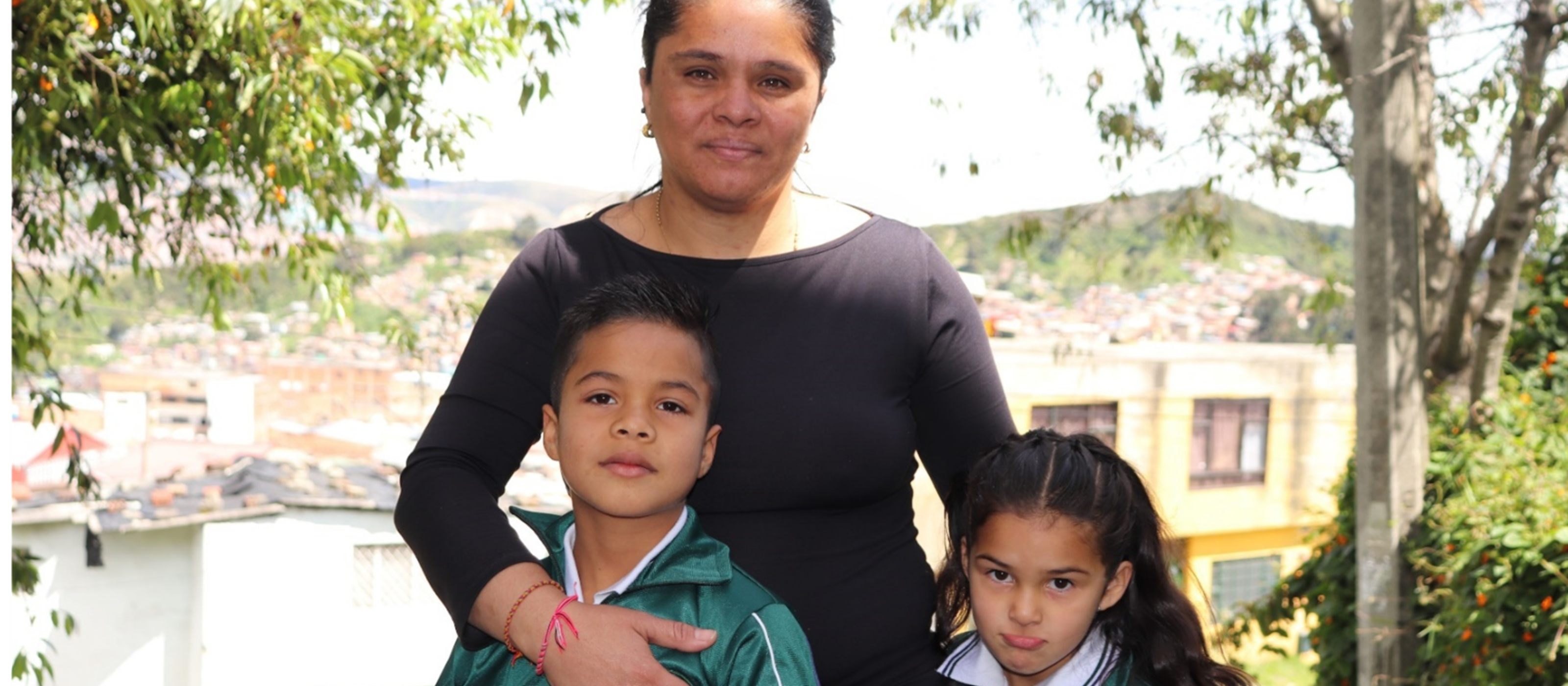
Header image: Heute hat Mercedes Fernandez einen guten Job als Haushaltshilfe gefunden, der es ihr erlaubt, die Arbeit mit der Betreuung der Kinder zu vereinbaren. © Juan Esteban Lopez