
Strengthening resilience and social cohesion
Overview
Humanitarian aid, income
1'377'296 Swiss francs
01.12.2023 - 30.11.2026
Mali, Mopti region, Bandiagara district
Direct beneficiaries: 1'120 agricultural producers and 2'800 members of 56 cooperatives
Indirect beneficiaries: The population of the 56 intervention villages (41'269 people)
Emergency aid: 419 households at risk
P230024
Projekt im Detail
Malian society is exposed to numerous risks that affect its daily life. These include climatic factors, conflicts, political and security instability and a weak economy. The majority of the population lives in rural areas and almost half live in extreme poverty.
The Dogon Plateau in the Cercle de Bandiagara, Mopti region, is located in the central part of Mali. As a result of the political crisis that Mali has been experiencing since 2012, the Cercle de Bandiagara is threatened by the presence of radical armed groups. Climate change, insufficient arable land and water shortages lead to cyclical structural crises, which are exacerbated by the security crisis and the violent conflict.
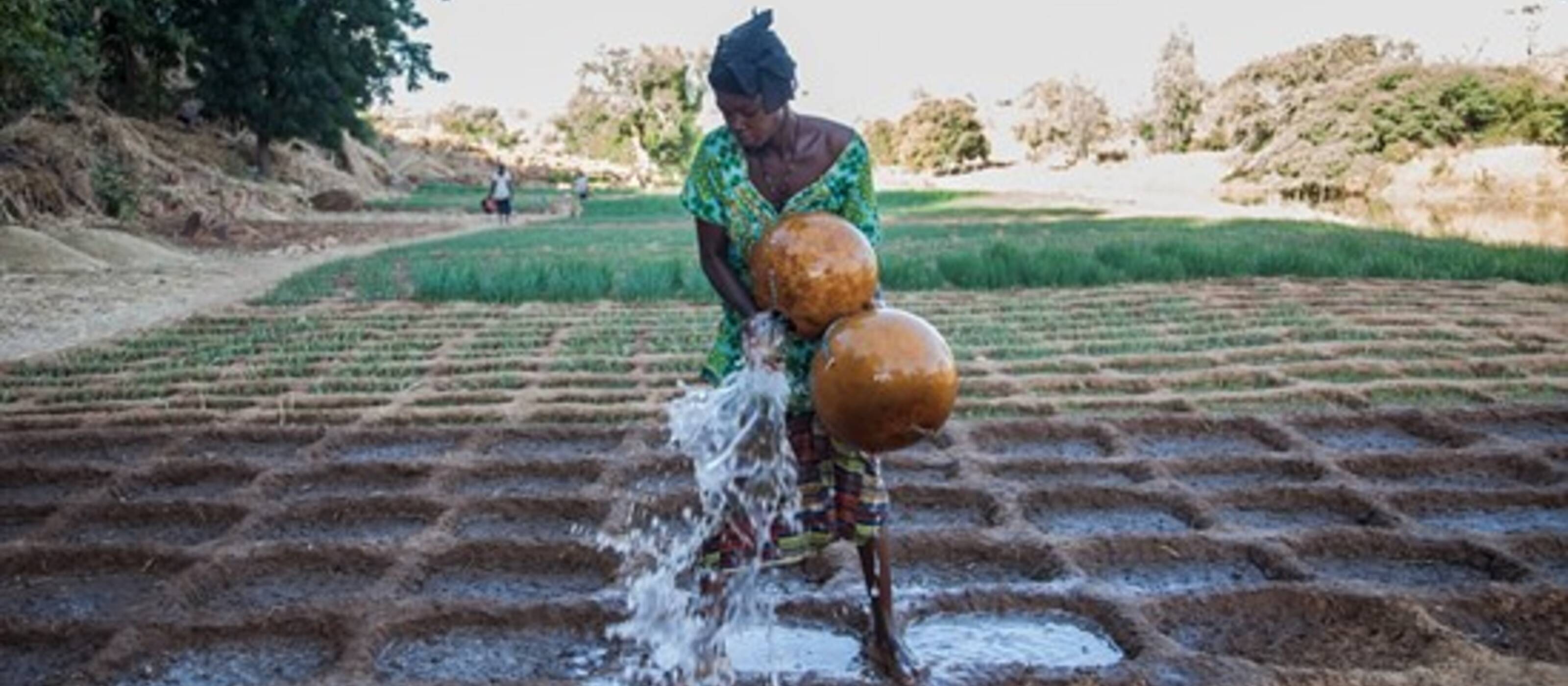
The majority of the population of Bandiagara lives from subsistence farming, although only 10% of the land is arable. Thanks to the ingenuity of vegetable farmers, the area under cultivation has increased in recent years. However, adaptation to climate change and the market system still need to be further developed and capacities to respond to conflicts still need to be strengthened.
This project builds on two previous phases (2017 - 2019 and 2020 - 2022).
The project works at the interface between development cooperation, humanitarian aid and peacebuilding. The focus is on social cohesion with the aim of increasing the resilience of the population of 56 villages in Bandiagara to climatic, economic, social and security-related shocks.
Development cooperation involves the institutional strengthening of local actors. It essentially consists of interventions aimed at improving agricultural production by applying agroecological principles, increasing income through improved market access for small producers and thus strengthening food security. Specifically, the production of 56 cooperatives in 56 villages is to be increased by strengthening their production capacities. The income of 80% of the 2,800 members of these cooperatives will be increased by diversifying their sources of income and improving market access.
Humanitarian aid consists of strengthening the capacity of the local implementing partner Caritas Mopti through its "Actions de Promotion Humaine" program to manage the framework for coordination between non-governmental organizations and development associations (CCPA-NGOs) in the Bandiagara district.
The most vulnerable households will be supported during the drought period.
Peace and social cohesion in the 56 villages are being strengthened by strengthening the conflict prevention and resolution committees and improving the management of natural resources - a frequent source of conflict at community level.
The situation in the Cercle de Bandiagara requires a systematic integration of development cooperation, humanitarian aid and peacebuilding. The project therefore pursues a nexus approach.
The project's technical and financial partners (Misereor and Caritas Switzerland) have already been working in partnership with Caritas Mopti for several years to help improve food security and market access for the affected population.
All Caritas Switzerland interventions in Mali follow a multi-stakeholder and participatory approach. Target groups, civil society organizations, private and scientific actors, decentralized technical services of the Malian state and local authorities are involved in all project phases.
Further projectsCommitment to a world without poverty
This project is financed by:
- SDC
- Misereor