

South Sudan: Emergency Relief, Protection From Sexual and Gender-based Violence and, Market Systems Development
Since 1972, Caritas Switzerland has been active in the East African region in close partnership with local communities and organizations. Today, the work of Caritas Switzerland in South Sudan focuses on Humanitarian Action, Development, and Peace (Nexus approach), Emergency Relief, Community Development, and Market Systems Development (MSD).
Caritas has been working in South Sudan for over 50 years, starting in 1972 as part of an ecumenical consortium delivering development aid in Eastern Equatoria State. It co-founded the Sudan Forum in Switzerland to advocate for peace during the civil war. In 2006, Caritas opened its Torit office to address urgent needs in food security, and education, later expanding to other states.
How we Foster Sustainable Development in South Sudan
The country team of 17 specialists based in Juba covers Nexus programming, humanitarian aid, livelihoods, capacity building, MSD, and Monitoring, Evaluation, Accountability, and Learning (MEAL). Caritas Switzerland is fully registered as an international NGO with South Sudan’s Relief and Rehabilitation Commission, ensuring compliance and strong local engagement.
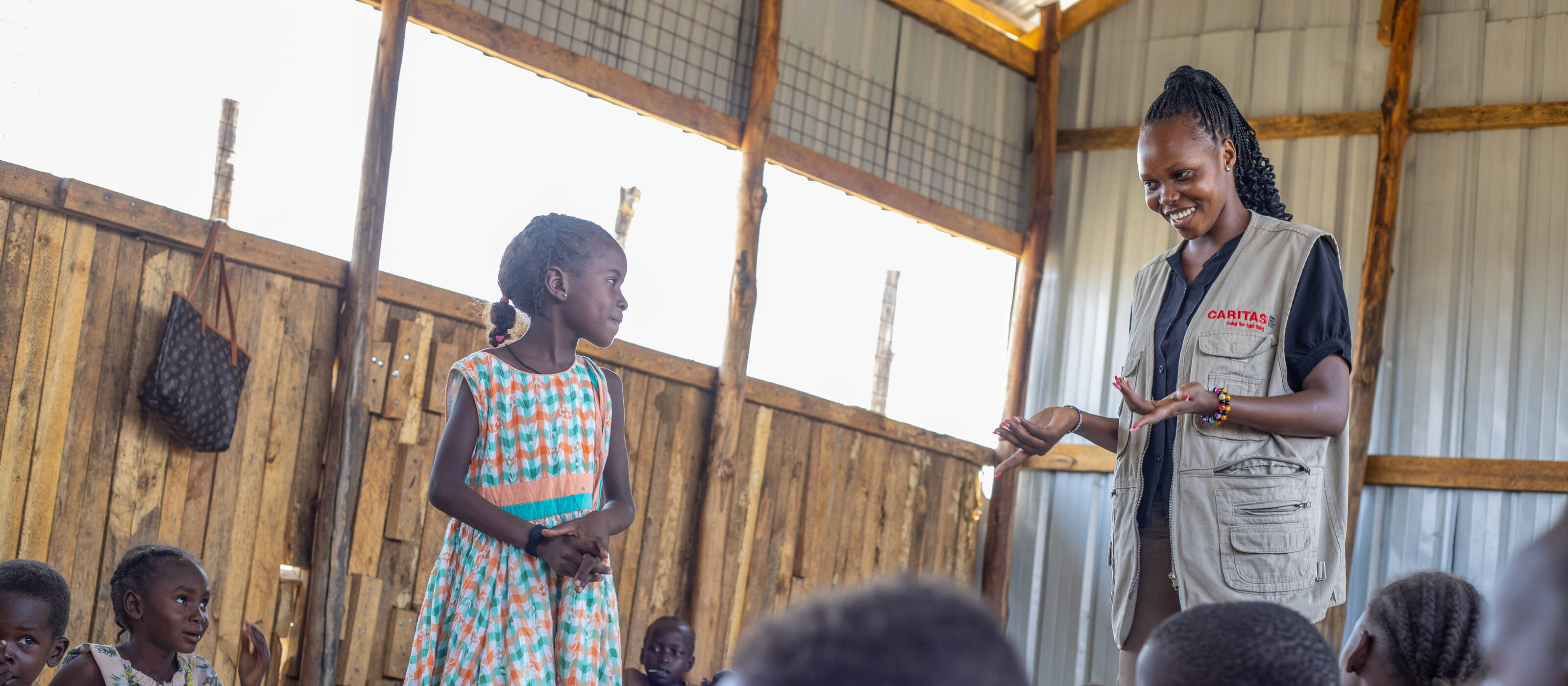
The project focuses on protecting vulnerable refugees and host communities in and around the Gorom refugee camp near Juba. Through survivor-centered services, community engagement, and safe spaces, the program works to prevent gender-based violence, strengthen protection systems, and support the wellbeing of women, children, and other at-risk groups.
Protection activities include psychosocial support and material assistance for survivors of violence, as well as child-friendly spaces where children can safely participate in activities that promote recovery and wellbeing. Community awareness campaigns promote gender equality, strengthen understanding of women’s rights, and help prevent domestic violence, forced marriage, and other forms of abuse.
By combining protection services with community-based prevention and capacity building, Caritas strengthens local support systems and promotes safer environments for displaced populations. Training community members as social and health workers helps ensure that protection and SGBV services remain accessible and sustainable beyond the duration of the intervention.
Initially a pilot that proved the concept in South Sudan, the SMAC+ Project has evolved into a multi-year, multi-million Euro program that strengthens smallholders’ productivity and market readiness through training, tools, and information. Guided by climate-resilience and agroecology, the project builds sustainable links with aggregators, processors, traders, and retailers for key commodities such as honey, groundnuts, and maize.
Using a Market Systems Development approach, the project also works with government institutions - including the Bureau of Standards and Ministries of Agriculture and Trade - to improve policies and regulations governing trade, creating an enabling environment for both farmers and private sector actors.
This SPEE Project seeks to reduce conflict and pressure on natural resources in South Sudan’s Central Equatoria State and Uganda’s West Nile sub-regions. It supports sustainable livelihoods, strengthens natural resource management, and promotes conflict prevention strategies at the community level. A strong cross-cutting gender focus ensures meaningful participation of women in decision-making across all levels of the community.
Peacebuilding and conflict-sensitive activities reduce tensions among refugee, returnee, displaced, and host communities, while natural resource management supports sustainable livelihoods and environmental protection.
When crises arise, cash transfers and other assistance meet urgent needs. Interactions between humanitarian, development, and peace components are carefully calibrated to ensure timely, effective investments and avoid dependency or duplication.
Caritas Switzerland has a long-standing presence in East Africa, with experienced teams and trusted partners in South Sudan, Ethiopia, and Uganda. It has successfully implemented cross-border projects between South Sudan and Uganda and plans to expand this approach, particularly for Triple Nexus and MSD programming.
A regional strategy is essential as Uganda hosts Africa’s largest refugee population, with South Sudan and Ethiopia equally facing high numbers of refugees and internally displaced people (IDPs). Developments in one country often have immediate effects across the region, which shares common challenges such as resource management, conflict risks, environmental degradation, and protection of people on the move.
From 2026 onward, Caritas Switzerland aims to strengthen regional cooperation by sharing resources, expertise, and learning opportunities across its regional presence. This will enable regional strategies, cross-country exchanges, documentation of best practices, and improved efficiency, ensuring a strong and high-quality portfolio across East Africa.
Strong Partnerships and Networks in South Sudan
Caritas Switzerland implements most projects through local partner organizations closely connected to communities, authorities, and extension services. To ensure participation, project teams maintain regular dialogue with target communities and engage community mobilizers, such as hygiene promoters, in implementation.
Using a multi-stakeholder approach, Caritas fosters collaboration with local authorities, community representatives, NGOs, government, and private sector actors to create synergies and enhance sustainability. Knowledge and skills transfer strengthens local capacities, ensures that practices continue beyond project completion and reduces dependency on external aid.
Caritas actively participates in coordination platforms such as the NGO Forum, the Partnerships for Recovery and Resilience (PfRR), and thematic clusters on security, cash assistance, and food security. It also maintains regular engagement with government institutions like the Relief and Rehabilitation Commission and collaborates with peer NGOs for learning and joint initiatives.
Our main donors: Swiss Agency for Development and Cooperation (SDC), Canton of Geneva, EU


Strategy 2026+ South Sudan


Country Programme Framework 2026+ South Sudan
Download (pdf, 229.6 KB)More Information About Our Work in South Sudan
Header image: Child Friendly Space in Gorom Camp, Juba © Kenyi Moses