

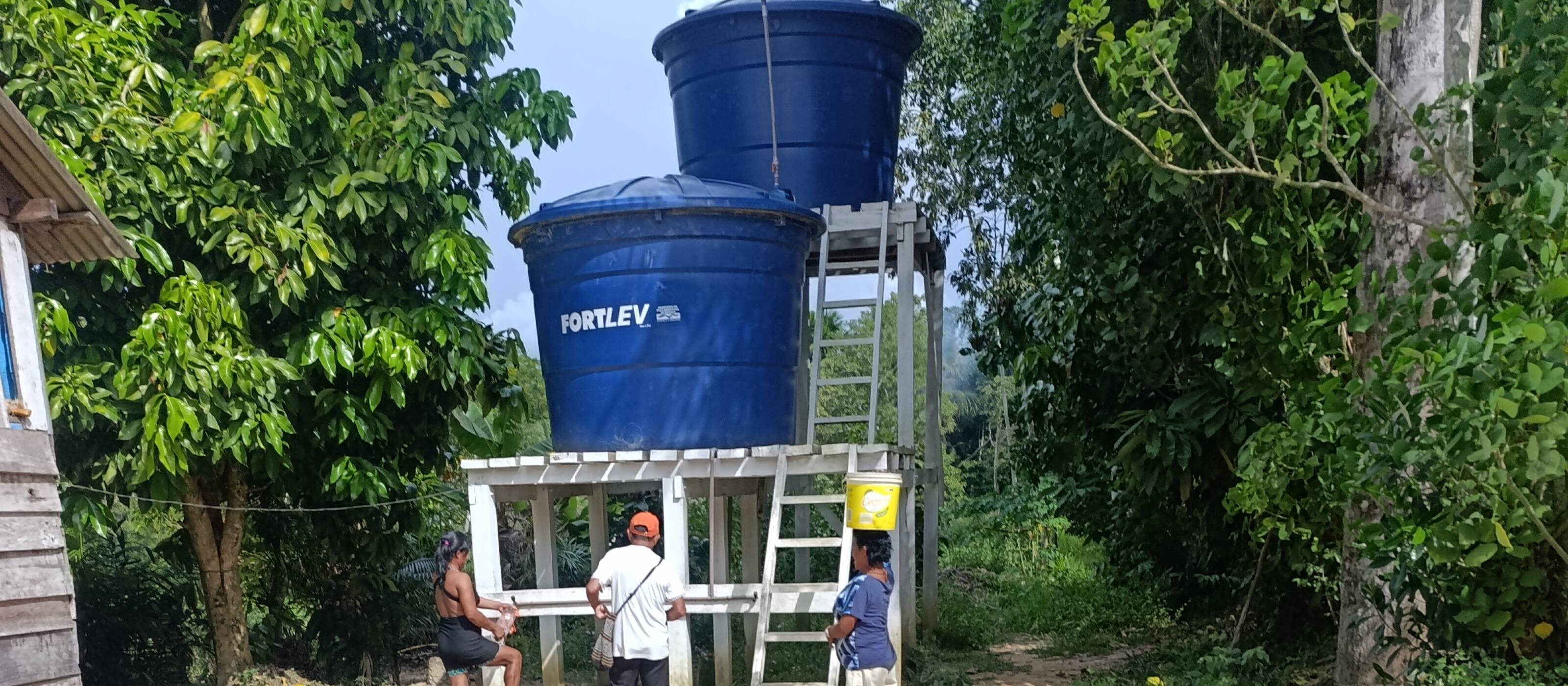
Preparedness and Early Action to Strengthen Indigenous Communities
Extreme droughts and floods threaten Indigenous and riverine communities in the Brazilian Amazon. Caritas Switzerland and Caritas Brazil strengthen early warning systems, disaster preparedness and access to safe water for 600 people in six communities.
Overview
Climate
215'475 swiss francs
1 August 2026 - 30 April 2028
Six communities in Humaitá municipality, Amazonas State
300 families and 600 members of Indigenous and riverine communities, with a particular focus on women and young people
P260037
SDC, EU*
*This is funded/co-funded by the European Union. Its contents are the sole responsibility of Caritas Switzerland and do not necessarily reflect the views of the European Union.





Project in detail
Indigenous and riverine communities in the Brazilian state of Amazonas face increasing threats from climate-related extreme weather. In 2023 and 2024, the Amazon Basin experienced its worst droughts on record, affecting more than 700,000 people. Severe floods followed in 2025 and affected around 133,000 households.Many communities have limited access to electricity and telecommunications. During crises, this isolation makes it difficult to collect data, transmit warnings and coordinate essential services.
In the southern Amazon, recurring disasters have led to severe food insecurity, water scarcity, interrupted services and increased exposure to violence and exploitation. In surveys, 79 per cent of families reported insufficient food for children and 97 per cent had to rely on alternative water sources. Traditional knowledge remains crucial for recognising changes in ecosystems and early warning signs. Yet the growing intensity and frequency of extreme events make them increasingly difficult to anticipate. At the same time, institutional responses remain fragmented. The project connects existing community capacities with public institutions so that climate risks can be addressed in a more organised, proactive and effective way.
The project strengthens preparedness, anticipatory action and rapid emergency response in six communities in Humaitá. It improves local coordination, clarifies roles and responsibilities and enables community actors to use early warning information in practice. This reduces delays in decision-making and allows response protocols to be activated more quickly.
Caritas Switzerland and local actors combine capacity building with community-based disaster risk reduction. Training, simulations and practical preparedness measures help ensure that emergency responses are coordinated, efficient and adapted to the realities of communities whose livelihoods, food systems, mobility and access to basic services depend heavily on rivers, forests and natural resources.
Training, simulations and clear responsibilities will enable 150 local actors to coordinate emergencies, organise safe evacuations, respond rapidly and communicate risks securely. Community Protection and Civil Defense Units will be established in Humaitá in line with national civil defence guidance.
Early Warning Systems will use validated thresholds such as river levels, rainfall patterns and other environmental indicators. Alerts will trigger immediate community action within six to eight hours and initiate coordination with municipal response mechanisms, generally within 24 hours. Early action and contingency plans will cover 600 community members.A total of 300 families will receive preparedness kits containing water-treatment materials, containers for safe water storage, hygiene supplies, cleaning and disinfection products, and water filters.
Additional equipment at community level will improve access to safe water, sanitation and basic hygiene during emergencies. The project is implemented by Caritas Brazil, whose local network enables it to reach remote areas and link community disaster risk reduction with early warning systems in Indigenous territories.
Further projects Commitment to a world without poverty

Header image: © Caritas Switzerland