

Our Commitment to the Middle East
Caritas Switzerland has supported crisis-affected populations in the Middle East since 2012, with a strategic focus on Syria and Lebanon. Through country offices in Beirut and Damascus and strong partnerships with local actors, we deliver principled, locally led humanitarian and recovery programming in the different countries.
Our work focuses on cash assistance, livelihood support, education, and protection for people who are especially vulnerable. At the same time, we supportour local partners strengthen their organizational and financial capacities. Our goal is to improve the living conditions, resilience, and self-reliance of people who are most affected by crises.
Priorities of our Work in the Middle East
The following operational priorities define the work of Caritas Switzerland in the Middle East.
The projects in the region combine cash assistance (CVA), vocational training and support for micro- and small enterprises (MSMEs) with a strong focus on women and people with disabilities.
In Syria, the LIFE II project implements integrated interventions that simultaneously address basic needs, income-generating opportunities, and education within the same regions. The programs are based on comprehensive needs assessments and analyses of economic opportunities in various sectors. This ensures that support is targeted, equitable, and tailored to local needs.
In Lebanon, program activities focus on skills development and the promotion of income-generating opportunities and entrepreneurship to help vulnerable households transition from aid dependency to sustainable income generation. The ARDNA project promotes post-conflict community reconstruction through vocational training, financial support, psychosocial counseling, and joint activities that strengthen social cohesion.
In the Gaza Strip, our focus is on cash assistance and psychosocial support for children. Ensuring the survival of vulnerable families is a top priority, which also means helping families cope with their extremely difficult living conditions.
In Iran, the distribution of emergency relief supplies ensures that particularly vulnerable families have the bare necessities for survival, such as access to water, hygiene items, and food. Caritas Switzerland also aims to integrate climate change considerations more strongly into its programs and office operations in the future. New and ongoing projects – including ARDNA – embed climate resilience into livelihoods, vocational training, and community reconstruction, while the country offices adopt climate-conscious working methods to promote sustainable processes.
To address the long-term impact of (internal) displacement, economic distress, and instability, Caritas Switzerland provides psychosocial support, activates referral pathways, and empowers community representatives to develop and implement own initiatives.
In Syria, the LIFE II project fosters social cohesion through inclusive dialogue platforms, community discussions, and community-led support projects that amplify marginalized voices and promote collective problem-solving.
In Lebanon, the ALERT and NOUR projects address urgent needs arising from the escalation of the conflict in 2026. The CLEAR project continues to meet basic needs through individual and group psychsocial support services (PSS), thereby promoting healing and strengthening social bonds.
Gender-specific aspects are systematically taken into account in all projects, with women being prioritized and their meaningful participation ensured.
In Gaza, the «Offering Life-saving Intervention & Vital Emotional Support» project addresses psychosocial support.
Caritas Switzerland works through national partners and provides sustained capacity development at technical, operational, and organizational levels including structured support in MEAL, compliance and accountability, information and data management, and safeguarding practices.
The LIFE II project emphasizes locally led action and strengthening the institutional capacities of both implementing partners and public sector actors. Capacity-building efforts are grounded in participatory assessments and tailored plans, aiming to enhance local leadership, reinforce public service delivery, and promote context-relevant programming.
Caritas Switzerland’s Middle East Program (MEP) is a regional program covering Syria, Lebanon, Occupied Palestinian Territory, Iraq, and Iran. It is managed under a unified strategy that fosters synergies in CVA, livelihoods, education, psycho-social support, social cohesion, and locally led action. The setup promotes cross-context learning, tool adaptation, and partner support, whereas lessons learned are shared globally to strengthen institutional quality.
Building on this regional foundation, the MEP is broadening its strategic reach by diversifying funding sources and engaging new donor groups – from private foundations to publicsector partners – while continuing to cultivate strong ties with institutional donors such as SDC, SwS, and EU to ensure greater sustainability and amplify program impact.
Due to the increased uncertainty and levels of conflicts in the region, Caritas Switzerland adjusted its geographic coverage. Transitioning out of the first emergency response phase, the Gaza context was integrated into the Syria Response Program and merged into the Middle East Program.
To ensure timely, effective, and principled humanitarian action in crisis situations, Caritas Switzerland intends to reinforce its collaboration with local Caritas partners across the MENA region, with an initial focus on Caritas Jerusalem, Caritas Iraq, and Caritas Iran.
Our Partners and Networks in the Middle East
We work with strong national and international partners in Syria, Lebanon and in Gaza:
- In Syria, Caritas Syria and the Department of Ecumenical Relations and Development of the Greek Orthodox Patriarchate of Antioch and All the East (GOPA - DERD) are the main partners.
- In Lebanon, we partner with Caritas Lebanon and Amel Association to implement our programs.
- In Gaza, we work with Catholic Relief Services and Caritas Jerusalem. In other countries of the Middle East the national Caritas network partner is also the logical counterpart.
Partnerships are built on shared principles and strengthened through continuous support in monitoring and quality management (MEAL), protection, cash programming, and financial management to ensure quality and sustainability.
We are an active contributor to relevant coordination mechanisms at regional, national levels and is a member of both the Lebanon Humanitarian INGO Forum and the Syria NGO Forum. Caritas Switzerland co-led the Cash Working Group in Damascus for five consecutive years and continues to engage in working groups and clusters across sectors including Basic Needs, Livelihoods, Education, and Protection. In Lebanon, we participate in national coordination forums, including the Livelihoods Sector Working Group, and supports learning processes through joint research and evidence generation.
Our Commitment to the Middle East


Our Commitment to the Middle East
Download (pdf, 267.09 KB)More Information About Our Work in the Middle East


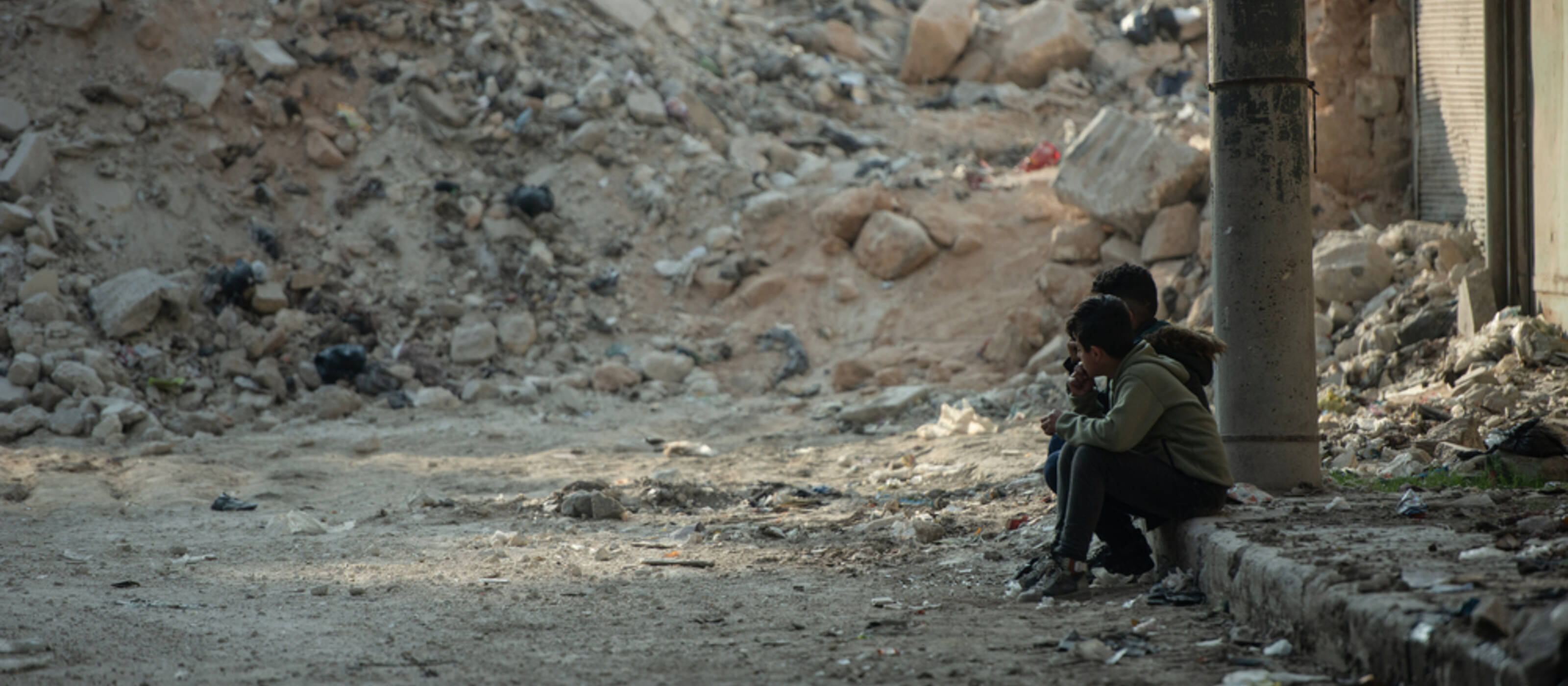
Header image: Destroyed in the war: the Syrian city of Aleppo. © Hasan Belal