

ARDNA: Achieving resilience through development and needed abilities – PHASE I
Overview
Migration, Klima
844'340 Swiss francs
01.01.2026 - 31.12.2027
South of Lebanon
2340 participants
P260001
Caritas Switzerland, SDC

Project in detail
Lebanon is in a fragile recovery phase after the 2024 conflict, which killed nearly 4,000 civilians and displaced over 1.2 million people. Southern regions, such as Tyre District, suffered extensive damage from airstrikes and bombardments. Although a ceasefire reduced hostilities, insecurity and uneven recovery persist.
The crisis is compounded by Lebanon’s ongoing economic collapse. Infrastructure remains damaged, inflation continues, and poverty affects 44% of the population. Humanitarian funding is shrinking, while food insecurity is rising—projected to reach 1.24 million people by October 2025.
Key livelihood sectors—agriculture, construction, and manufacturing—were severely disrupted. Agricultural losses were extreme in southern districts, and Micro, Small, and Medium-sized Enterprises, which form 90% of the economy, saw widespread closures. Unemployment spiked, especially among women and youth, and income losses deepened economic distress.
Psychosocial impacts are widespread, particularly among children and displaced communities, underscoring the urgent need for a multisectoral approach that integrates mental health support, social cohesion, and livelihood assistance.
The ARDNA project aims to strengthen the resilience of crisis-affected communities in southern Lebanon by establishing a multifunctional livelihood and resilience center on land owned by AMEL Association. This strategic advantage ensures long-term sustainability, allowing the project to evolve beyond its initial phases into a permanent community hub.
The project has a strong focus on inclusion, particularly for women, youth, and children, and promotes climate-smart and resource-efficient practices to support long-term sustainability.
By combining skills development, business and entrepreneurship support, livelihood training, psychosocial services, and child-friendly spaces, ARDNA provides a full package for resilience and independence.
This unique feature ensures that participants benefit not only from theoretical training but also from hands-on practice in agriculture and other livelihoods directly at the site.
The project delivers agricultural vocational training to 140 participants, TVET to 420 participants, and employability and entrepreneurship training to 70 participants each. Of these, 80 will receive grants to expand their income-generating activities.
In the protection and social cohesion component, 700 individuals will attend awareness sessions and 400 will participate in psychosocial support sessions. Four community-led initiatives will be implemented to foster collaboration, and 300 children will benefit from the child-friendly space.
Institutional strengthening will include training for 20 partner staff, provision of a soil testing machine to LARI, two soil/water tests, and one small-scale project with the Union of Municipalities.
Together, these efforts aim to promote economic recovery, mental wellbeing, and sustainable local development. Since some individuals may benefit from multiple project services—such as participating in more than one training and engaging in psychosocial support activities — the total number of unique participants reached will be 2340.
Further projects Commitment to a world without poverty

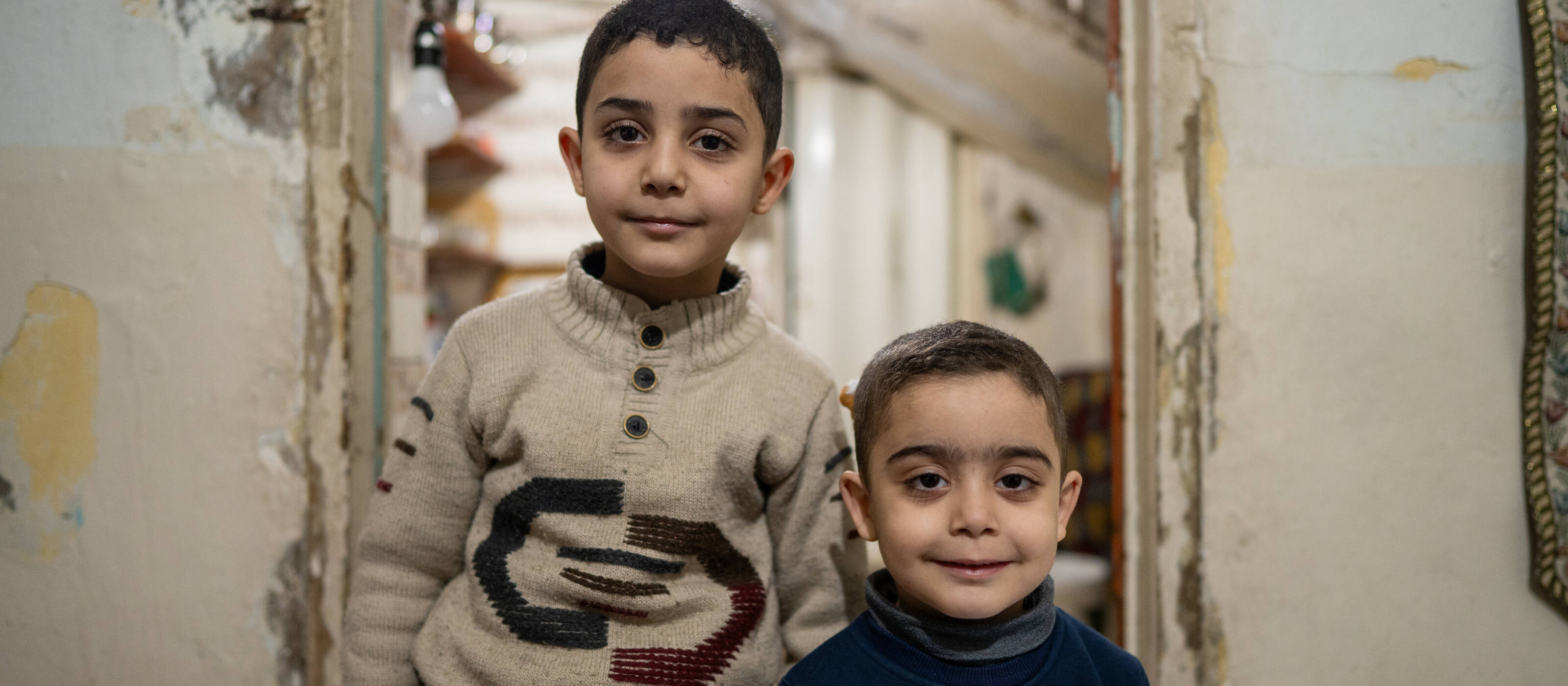
Header image: Special protection is given to children and families. © Adeeb Farhat