

Linked Interventions for Emergencies and Economic-Stability (LIFE II)
Overview
Humanitarian aid
4'423'845 swiss francs
Rural Damascus, Aleppo, Homs and Hama
24'709 vulnerable Syrians
P240036
Caritas Poland, SDC

Project in detail
Syria is currently facing one of the world's most volatile and complex emergencies. The 14-year conflict, exacerbated by the collapse of the old regime, has exacerbated an already catastrophic humanitarian crisis. According to the Syria Humanitarian Needs Overview (HNO) 2024, 16.7 million people are in need of assistance - the highest number since the crisis began in 2011. Syria remains one of the countries with the highest number of displaced people in the world, with 7.2 million internally displaced people. Of the 1.1 million people displaced by the escalation of hostilities at the end of November, some 627'000 remain newly displaced, 75% of whom are women and children. The prolonged conflict has severely damaged the country's infrastructure, economy and social fabric. The already precarious situation was exacerbated by the consequences of the earthquakes in February 2023.
These cumulative factors mean that affected households have great difficulty restoring their livelihoods. The unemployment rate has risen sharply and stood at almost 50% of the working-age population in 2022. At the same time, the education system remains fragmented, limiting children's access to education. At least 2.4 million children were out of school in 2024. In addition, household coping strategies are increasingly deteriorating, resulting in children being taken out of school and sent to work - in some regions, this affects up to 30% of children, putting them at high risk of protection.
The project aims to promote protection, improved living conditions and increased resilience of conflict-affected communities in Syria by providing life-saving and life-sustaining assistance through cash transfers, education and livelihood services to a total of 24'709 Syrians. An additional focus is on the integration of social cohesion aspects and a comprehensive localization component. This integrated and holistic approach aims to achieve an impact beyond the 24-month project duration.
The project aims to empower the staff of the implementing partners, public actors and local stakeholders through special capacity building measures to become "change agents" who can independently lead and implement the process of emergency relief and reconstruction. 2'593 people will benefit from these project activities.
Participants in the project receive needs-based support through cash transfers, education and livelihood measures to stabilize households and contribute to their current and future income. This includes financial support, training to increase income opportunities, business grants and household mentoring. Children of households receiving cash or enterprise assistance can benefit from education and protection measures. Additional informal education (NFE) is designed to improve the school performance of children who have difficulties or have dropped out of formal school. They are integrated into the formal education system. In addition, teachers at public schools receive customized training on teaching methods and protective measures. Group therapy sessions for children, young people, caregivers and teachers are designed to address protection needs. 13'510 people will benefit from these project activities.
Social cohesion is promoted as part of the project and strengthened through joint activities. Discussions in demographically matched groups address specific community needs, including those of people with disabilities. Representatives of these groups and volunteers from the implementing partners form a core working group that jointly develops and implements community support projects based on feedback from household mentoring. This collaborative approach strengthens long-term coping mechanisms and contributes to stability and social cohesion in the community. 25'078 people will benefit from these activities.
The total number of unique project participants is estimated at 24'709, based on the assumption that 40% of individuals will benefit from various services offered in the project. Given the high level of need across all sectors in Syria, it is crucial to meet the needs of participants as holistically as possible in order to build long-term resilience and self-reliance.
Further projectsCommitment to a world without poverty

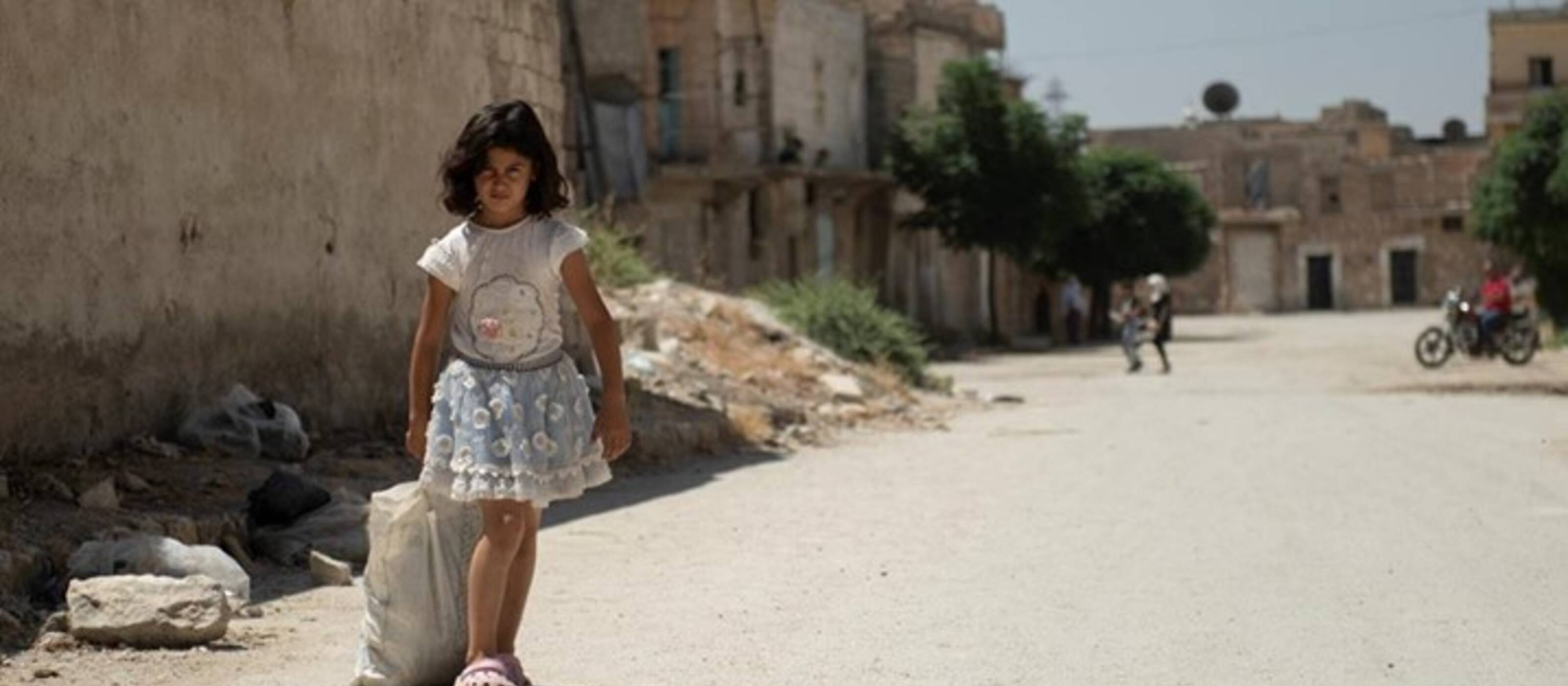
Header image: A Syrian girl on her way through the destroyed streets of Aleppo - the project supports vulnerable families with life-saving aid. © Hasan Belal