Interethnic Education in Kosovo (IEK)finished
Project in detail
Kosovo is a small, but multicultural country that encompasses a variety of different ideas, values, traditions, and perspectives. The majority is ethnically Albanian, while other ethnicities include Serbs, Bosnians, Turkish, Gorani, Roma, Ashkalia, and Egyptian.
Even though some of these communities are better integrated, many minority groups are excluded. Currently, only 24% of children from Roma, Ashkalia and Egyptian communities finish secondary school and Youth from minority groups are affected by unemployment to an above-average extent. The reality at school is very different from municipality to municipality: children and students of different ethnicities attend classes in segregated environments, leaving little possibilities for exchange among children of various backgrounds. In addition, there are little to no extracurricular activities where children and young people can exchange, and consequently learn to accept, appreciate and embrace cultural differences. Current practices in schools have shown that little to no attention is given to topics such as diversity, tolerance, solidarity, respectful interaction, acceptance, patience, and understanding. To achieve a better understanding of other ethnicities and to foster tolerance in Kosovo, innovative approaches, best practices, and concrete tools are needed, beginning early with children and their parents. Educators and schools need more awareness-raising practices to be ready to overcome such differences, especially as they have a crucial role in children’s lives and upbringing.
The overall goal of this project is to contribute to inter-community relations by strengthening dialogue and exchange in educational spaces in multi-ethnic municipalities of Kosovo.
By focusing on Young Professionals and in-service educators working with primary school children, the project will also enhance their professional capacities and consequently their employability.
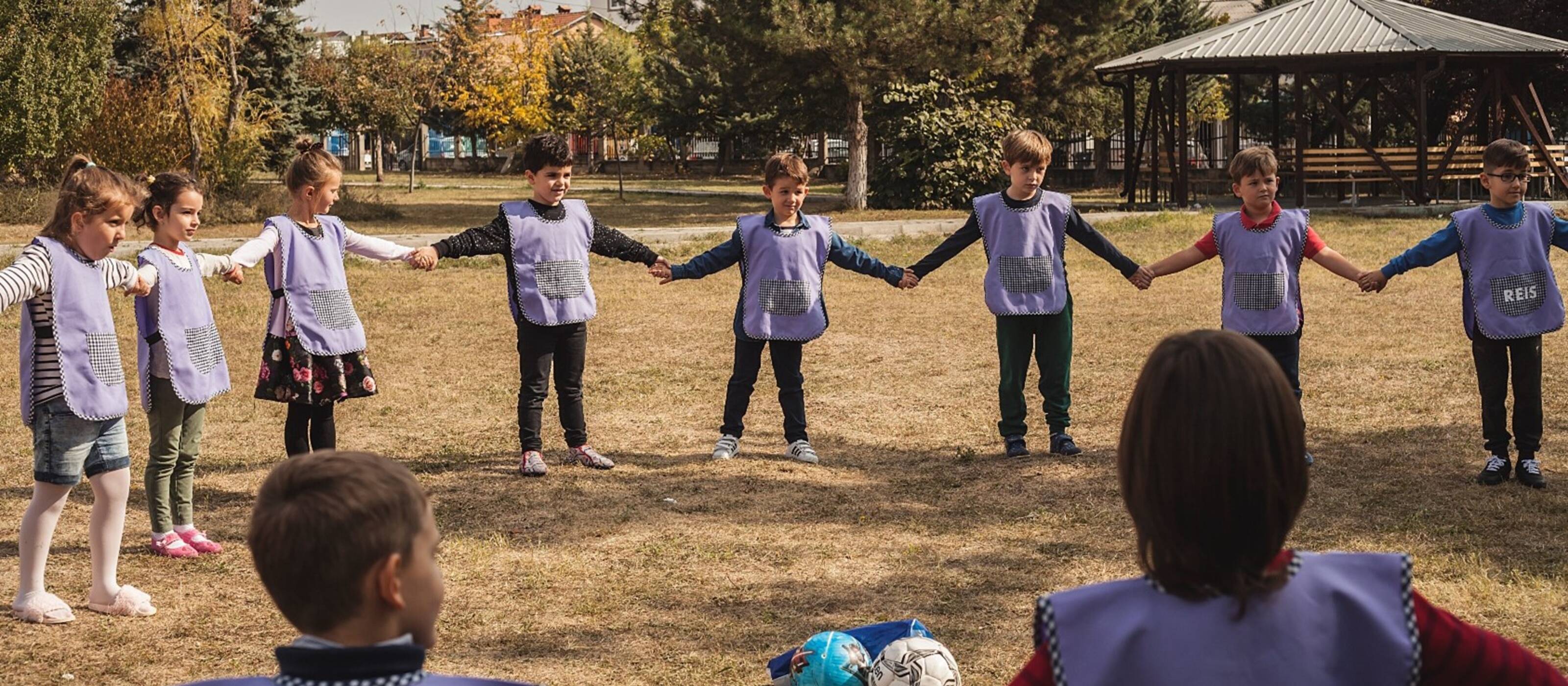
The project contributes to improved interethnic relations by strengthening dialogue and exchange in educational spaces in multiethnic municipalities of Kosovo. By focusing on children in primary education (6 - 10 years), change will be brought at an early stage through the inclusion of future and current educators and parents a wider impact in the municipalities can be achieved:
The young children themselves are bound to become more open-minded, socially and culturally competent adults, that embrace ethnic diversity. In addition, schools and municipal education institutions, including in-service teachers and Young Professionals (recent or future graduates of psychology pedagogy and social sciences) are capacitated in contemporary pedagogical concepts, including the importance of psychological assistance at schools and interethnic exchange. This will not only positively impact their teaching, but also strengthen their professional competencies and enhance their employability. Lastly, the project aims at stronger inclusion and communication with parents and caregivers, paving the way to ethnic and cultural openness and a more immediate effect to integration and interethnic exchange in the selected municipalities.
With this project, Caritas Switzerland is working on the thematic focus of income in the education sector while also addressing multiculturalism. Interethnic education for young children, including marginalized children, is improved by providing practical training to Young Professionals and in-service educators working with children in multi-ethnic municipalities. In doing so, the foundation is laid for a more tolerant society as well as for better qualified and capacitated educators to remain and newly enter the labor market and thus secure incomes.
CACH Kosovo will work in close collaboration with national and local government actors, such as the Ministry of Education, Science Technology and Innovation, the National Institute of Psychology and Municipalities. An interethnic approach is used in all activities. This will promote tolerance, socio-economic empowerment, and social cohesion.
Facts and figures
Income
145'017 Swiss Francs
Five Municipalities in Kosovo: Kamenica, Obiliq, Fush Kosova, Prizren und Strpce
Young Professionals, in-service educators and school children in multi-ethnic municipalities
German Cooperation