


Earthquake Response and Community Resilience Programme
Overview
Humanitarian aide, Income, Nutrition, Education
608'600 swiss francs
01.09.2025 - 31.10.2026
Sagaing, Mandalay, and Inle Lake Region, Myanmar
Earthquake-affected households, particularly women-headed households, children, persons with disabilities, elderly persons, and internally displaced and conflict-affected persons.
P240044
Caritas Switzerland
Project in detail
On 28 March 2025, a magnitude 7.7 earthquake struck along the Sagaing Fault, devastating communities in Sagaing, Mandalay and the Inle Lake region of Southern Shan State in Myanmar. Over 5,400 people were killed, 11,400 injured, and almost 49,000 homes destroyed. Critical infrastructure such as schools, hospitals, dams and water systems suffered severe damage, leaving 2.4 million people in urgent need.
This disaster compounds an existing humanitarian crisis driven by armed conflict, economic collapse and mass displacement, with access to many affected areas restricted by insecurity, destroyed transport links and bureaucratic impediments. Vulnerable groups – including women-headed households, children, elderly persons, persons with disabilities and internally displaced persons – face heightened protection risks, loss of livelihoods and limited access to essential services.
To provide life-saving humanitarian assistance while strengthening local resilience through multi-purpose cash assistance, water, sanitation and hygiene rehabilitation, protection services (including child protection and gender-based violence prevention and response), livelihood restoration and disaster risk reduction planning.
- 3,063 households (approximately 7,463 people) will be supported with multi-purpose cash assistance, hygiene kits, water, sanitation and hygiene services, and livelihood recovery measures.
- Children and caregivers will have access to safe spaces, psychosocial care and child protection case management.
- Livelihoods will be restored through cash-for-work, vocational training and micro-grants.
- Community disaster risk reduction plans will be developed, early warning systems installed and preparedness drills conducted.
- Inclusive protection systems will be established, with functional referral mechanisms and accountability-to-affected-populations structures in place.
Further projects Commitment to a world without poverty

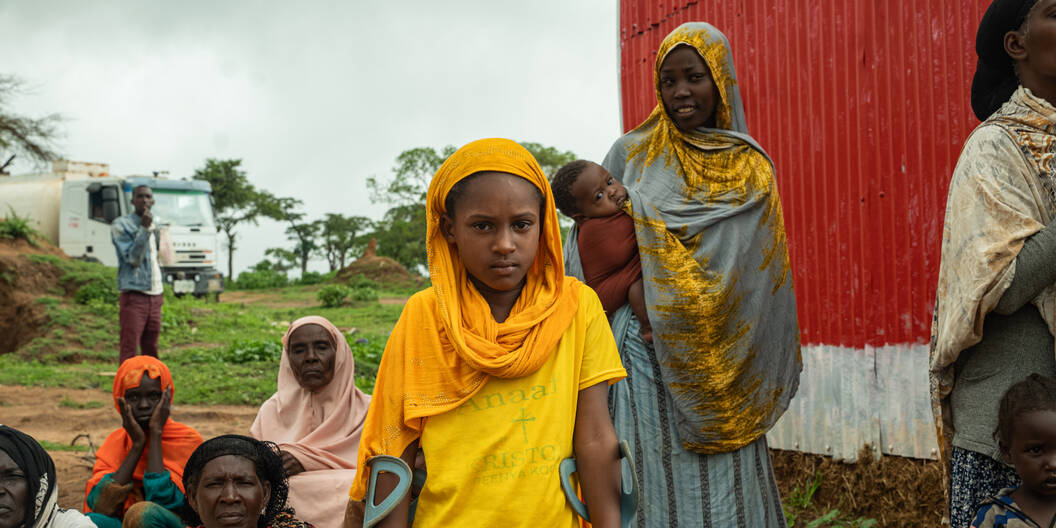
Header image: Families with children are among the most vulnerable groups. © CRS