

Consolidating Weather, Water and Climate Services
Overview
Climate
374'357 swiss francs
01.08.2025 - 31.03.2027
Entire country of Tajikistan
The Tajik population, small-holder and commercial farmers, administration and authorities at district and national level
P250039
Caritas Switzerland
Project in detail
The population of the mountainous regions in Tajikistan is among the poorest and most vulnerable. In the aftermath of the collapse of the Soviet Union and the supply of gas and energy, a large part of the existing forests were cut down to meet the immediate demand for fuel. The associated degradation of soil and land is exacerbated by widespread overgrazing. Entire ecosystems are only partially functional, which limits the agricultural productivity of the rural population and contributes substantially to the frequency and intensity of natural disasters such as floods, landslides and avalanches. Advancing climate change is further exacerbating this situation.
In the overall economic and political context of Tajikistan, an improvement in these living conditions can only be achieved through the direct empowerment of those affected to increase their agricultural productivity despite challenging climatic and environmental conditions, while at the same time managing natural resources sustainably and being better prepared for natural disasters.
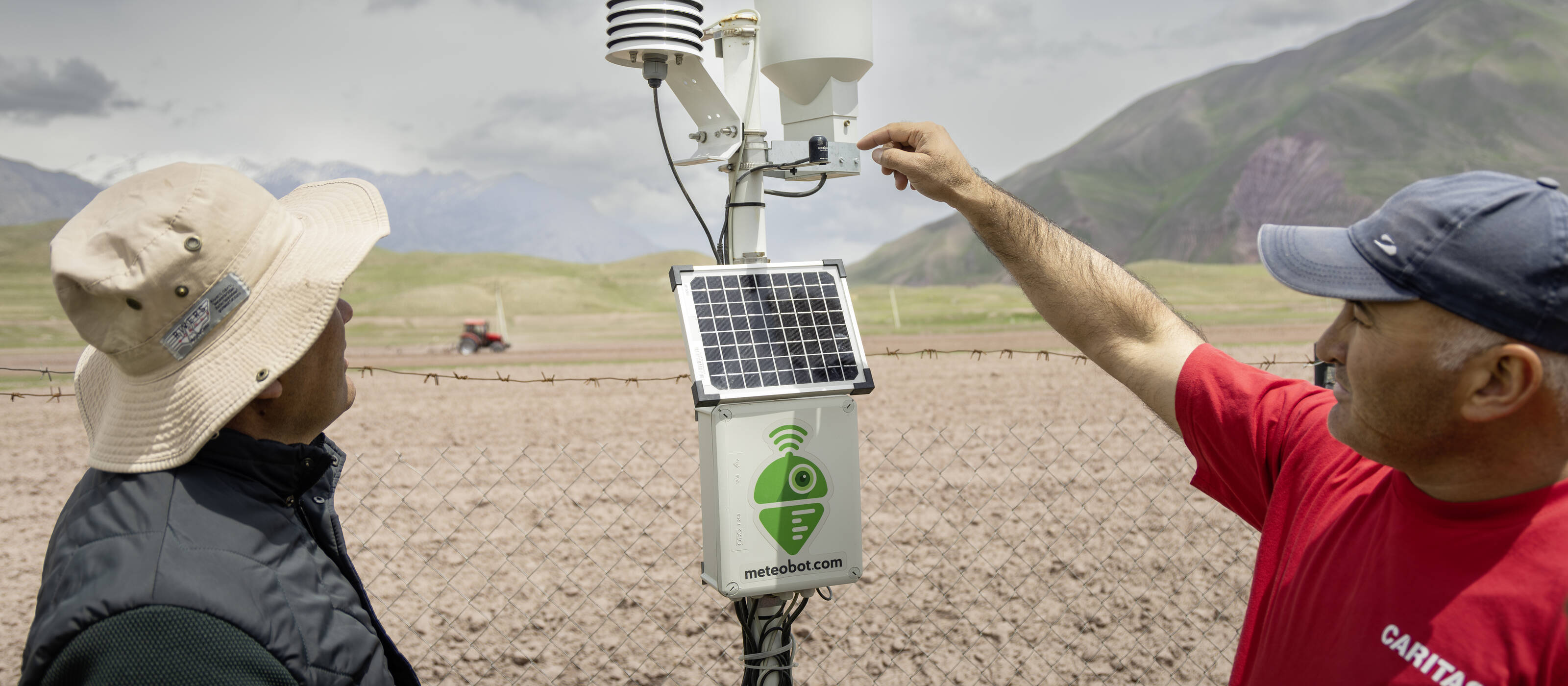
Over the past years, Caritas Switzerland with co-funding from the Swiss Agency for Development and Cooperation (SDC) has invested in the development of targeted Weather-Water-Climate-Services (WWCS), which increase profitability of rural livelihoods and at the same time provide the entire country with improved weather forecasts and weather-related public services.
In this follow-up project, sustainability of the established system is at the center. This will entail the identification and establishment of a suitable institutional setup, in collaboration with Tajik Hydromet, to house the technical systems which generate the WWCS. Secondly, business cases shall be established, to channel the profit from applying WWCS, e.g. in commercial agriculture, into the maintenance and upkeep of the WWCS system.
WWCS-based decisions improve agricultural productivity (e.g. through more efficient irrigation, weather-based planning of sowing and harvesting, pest control...) and reduce the vulnerability of rural households and communities to natural hazards.
WWCS requires data on weather and the environment. In this follow-up project, the innovative underpinning of WWCS from low-cost open-source weather stations and the open-source system which generates weather forecasts and WWCS from these shall be put on a sustainable basis, to secure the positive impacts from employing WWCS for decision making at all relevant levels for the long term.
Further projects Commitment to a world without poverty

Header image: Gute Wettersysteme sind zentral für eine funktionierende Landwirtschaft. © Reto Albertalli