Combating climate change and energy poverty through energy efficiencyfinished
Overview
Climate change, income and migration
1'900'000 Swiss francs
01.07.2022 - 31.03.2025
Tuzla and Zenica-Doboj Cantons (Federation of BiH) and City of Bijeljina (Republika Srpska)
Urban and rural population, municipal administrations
P220056
Project in detail
The current global crisis makes the need to address climate change and exponentially rising household energy costs more urgent than ever. Caritas Switzerland offers local institutional and civil society actors solutions to practically alleviate energy poverty while adapting to the consequences of climate change. The project offers innovative alternatives to the use of fossil fuels for heating public buildings, such as the use of geothermal or solar energy. Innovative refinancing approaches such as contracts with energy service providers provide a viable basis for achieving greenhouse gas emission reduction targets.
Current crises such as war in Europe, pandemics, and a shortage of skilled workers in Western Europe are exponentially accelerating the migration of qualified workers from Bosnia and Herzegovina (BiH). Without the necessary skilled workers, however, the successful implementation of the energy transition will not be possible. This project therefore also strengthens the efforts for practical and demand-oriented vocational training. Through intensive cooperation with the private sector, the attractiveness of working in the energy sector in Bosnia and Herzegovina is being increased and the pressure on the population to migrate is being counteracted.
24 public buildings will significantly reduce their energy consumption, costs and greenhouse gas emissions by using renewable energy sources. In addition, the project will work with selected local governments to improve local households' access to modern and affordable energy services and sources and reduce their energy poverty. Existing and future professionals specialised in energy efficiency and renewable energy technologies will gain more practical knowledge and improve their local employability.
The project is based on a systemic approach with increased involvement of local authorities as key stakeholders in alleviating energy poverty.
A crucial aspect for sustainability is the close involvement and cooperation with target communities and local school authorities as well as the Ministry of Spatial Planning, which is a major co-financier of this project. The strong and participatory involvement of these public authorities is essential for the necessary ownership, maintenance and sustainability of the measures.
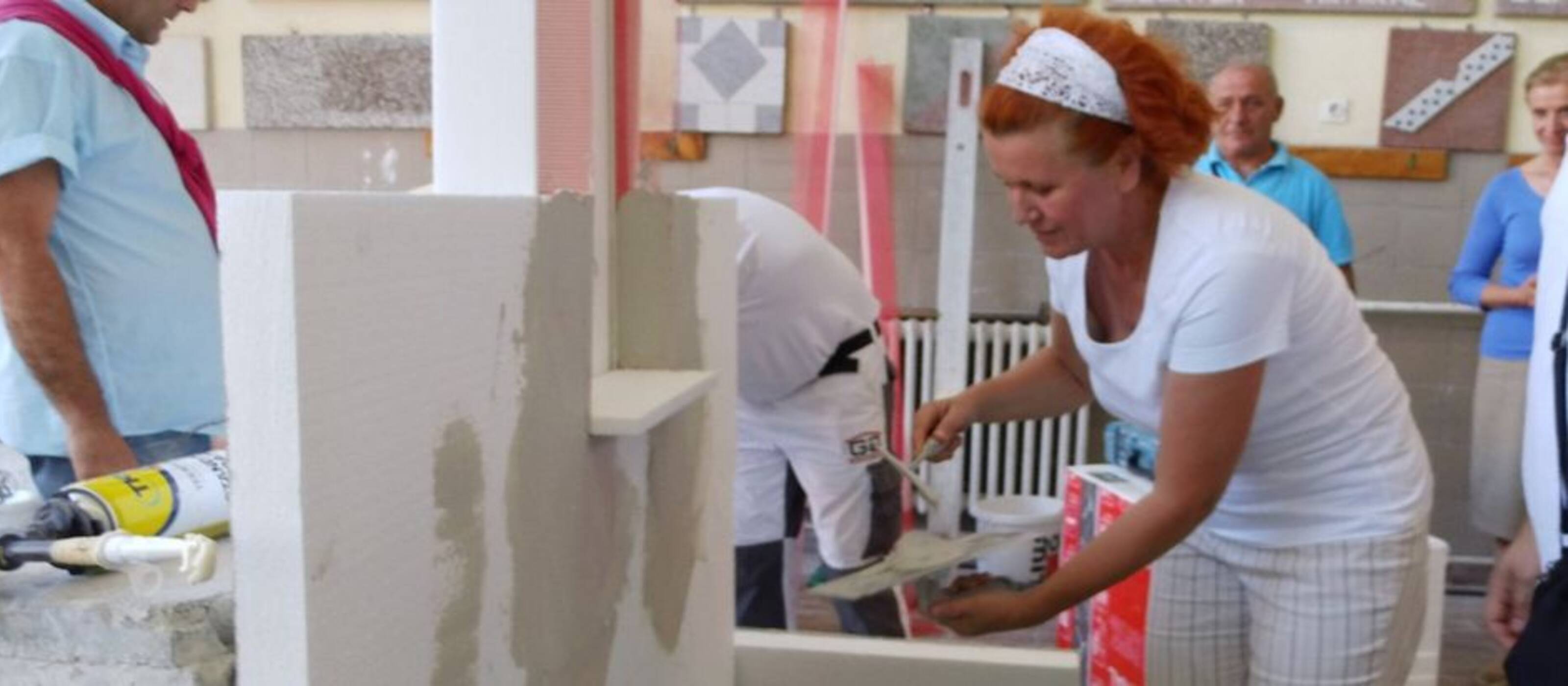
In adult education in the field of energy efficiency and renewable energy, close cooperation with the private sector has been agreed in addition to various vocational schools: this ensures the best possible sustainability in terms of training offered with subsequent secure employment.
Since 2016, the CACH IC strategy has focused on combating climate change with a strong reference to renewable energy and energy efficiency. In BiH, CACH has been implementing various projects in the field of energy efficiency for over 10 years and enjoys an excellent reputation in Bosnia and Herzegovina in this regard.
The experience gained, particularly in the areas of combating energy poverty and promoting innovative refinancing models for investments in the topics of renewable energies and energy efficiency, was established in a first project phase from 2016 and has been expanded since 2019.
These approaches and project strands have been complemented by investment in ongoing efforts with the private and education sectors to generally improve the training of professionals in these areas and make them practical and relevant to the demands of the labour market.
In continuation of the 3-phase programme launched in 2016, special attention will be paid to stronger institutionalisation and anchoring in the strategies and budgeting of local authorities, the private sector and local civil society.
Further projects Commitment to a world without poverty

The project is funded by:
- SDC
- Various municipal and cantonal administrations as well as ministries at federal level