

Cash Assistancein Re-emerging Markets (CARMA IV)finished
The crisis has intensified after 13 years of hostilities and a persistent economic downturn. The seismic events severely damaged already weakened infrastructures, further exacerbating the dire economic situation and depleting the resilience of the population. To address the unprecedented level of vulnerability of Syrians, the project aims to increase the protection of vulnerable Syrian families by providing life-saving and life-sustaining assistance through cash transfers and holistic case management services.
Overview
Humanitarian Aid
3’409’183 Swiss francs
Aleppo, Homs, Hama, Rural Damascus, Dara’a
14’895 vulnerable Syrians
P240016
Project in detail
In 2024, the humanitarian situation in Syria has further deteriorated, with 16.7 million people in need, up from 15.3 million in 2023. Among those in need, 5.5 million are displaced. The crisis has intensified after 13 years of hostilities and a persistent economic downturn. The earthquake in February 2023 also displaced hundreds of thousands of families, led to nearly 5'900 deaths, and left more than 12'800 people injured in Syria alone.
The seismic events severely damaged already weakened infrastructures, further exacerbating the dire economic situation, depleting the resilience of the population and pushing communities to the brink, instilling widespread uncertainty and a loss of hope for improvement. Anticipated to persist and potentially escalate, the humanitarian needs are compounded by ongoing hostilities, increasing tensions in the Middle East as a whole, displacement, food insecurity, climate change, and a health crisis.
The absence of adequate funding for a robust response heightens the risk of the country sliding into an unmanageable disaster. According to the Syria Humanitarian Update (OCHA, January 24), Syria reported an alarming annual inflation rate of 84.9 percent in 2022. In September 2023, the price of the reference food basket increased to reach 983'000 SYP, doubled since the start of 2023, and tripled within 12 months.
To address the unprecedented level of vulnerability of Syrians, the project aims to increase the protection of vulnerable Syrian families by providing life-saving and life-sustaining assistance through cash transfers to 14’895 Syrians and holistic case management services to 3’334 Syrians. Since the economic situation in Syria doesn’t allow families to get out of their situation based on the intervention of this project alone, Caritas Switzerland targets families also with other interventions, in order to bundle efforts.
The project will contribute to the improved ability of vulnerable internally displaced, returnee, refugee and host community households to protect and sustain their lives through a combination of cash and case management services. The case management component is led by Caritas Austria.
By providing cash transfers to the most vulnerable families, beneficiaries will be enabled to address their most essential basic needs, such as food, shelter and medicine. Additional cash support will be granted during the winter months to cater for special winter needs, such as heating. With their basic needs covered, HHs will be able to prevent the recourse to irreversible negative coping mechanisms, increase their food consumption and reduce their negative coping strategies during the project intervention.
The case management approach addresses the differential needs of families through targeted protection services by trained case workers, for instance to support access to schooling, caring for people with disabilities and gender-based violence survivors. Individual case assessments inform the assistance package based on specific needs and includes in-kind or cash support, for instance to access legal advice or cover school fees, internal and external referrals to further specialised services, and group awareness raising sessions on protection topics such as children rights. With this combined approach, vulnerable Syrians receive individualised support that extends beyond the lifetime of the project.
Further projects Commitment to a world without poverty

This project is financed by:
- European Union Civil Protection and Humanitarian Aid (ECHO)*
- Caritas Austria
- SDC



*This is funded/co-funded by the European Union. Its contents are the sole responsibility of Caritas Switzerland and do not necessarily reflect the views of the European Union.
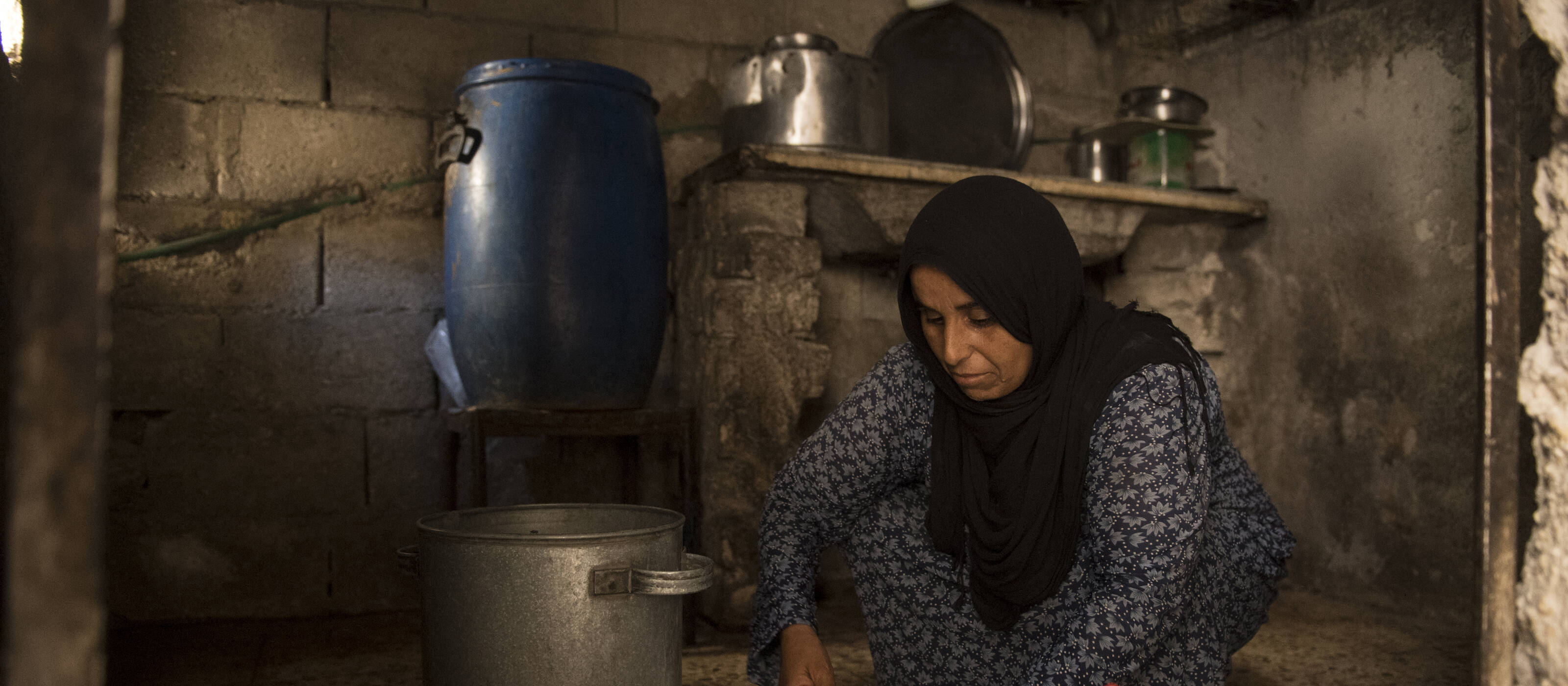
Header image: Khadije has 7 children. She fled the war with her husband and now lives in Jabal Bedro - Aleppo. Only one child, her 13-year-old daughter, goes to school. They are enrolled in the Caritas project and the girl will soon be attending the Caritas supplementary school. © Hasan Belal