

Bolivia:
Gender-based and digital violence limit the safety and future opportunities of many girls and young women in Bolivia. A joint study by Caritas Switzerland and Solidar Suisse lays the groundwork for a future project designed to specifically strengthen protection, self-determination, and economic participation.
Overview
Income
127'849 Swiss Francs
17.08.2026 - 15.01.2027
La Paz, El Alto, Cochabamba, Santa Cruz, Beni, Pando
Actors, partners, institutions, service providers who work with victims of GBV and other violence, adolescent girls, young women, victims of child and early forced marriages
P260046
SDC

Project in detail
Violence remains a major concern in Bolivia. Around 38,700 cases of gender-based violence were reported in 2025, more than 70 per cent of them involving domestic or family violence. Women and girls account for more than 80 per cent of survivors of sexual violence, and Santa Cruz records the highest number of cases. Digital violence is also increasing: women submit around 90 per cent of complaints involving online threats and the dissemination of sexual content, while children and adolescents are affected by the non-consensual sharing of images. Reliable data and monitoring remain limited.
Gender-based violence is closely linked to adolescent pregnancy, early unions, school dropout and economic dependence. More than 28,000 pregnancies among girls and adolescents were recorded in 2024, with Beni and Pando showing the country's highest rates of adolescent motherhood. These factors restrict educational and economic opportunities and reinforce vulnerability.
Caritas Switzerland and Solidar Suisse are preparing a joint project, planned to start in June 2027, to prevent violence and strengthen protection. Updated, context-specific evidence is needed to define the locations, priorities, partnerships and capacities that will make the future intervention effective.
The study will produce evidence-based strategic recommendations for the joint project of Caritas Switzerland and Solidar Suisse. It will identify where to intervene, which priorities to address and which capacities to strengthen so that vulnerable girls and young women are better protected, empowered and included in social and economic life. The future intervention will be developed in partnership with local organisations.
The assessment combines seven areas of analysis. It examines the geographic distribution of gender-based violence, adolescent pregnancy and child, early and forced marriages and unions, and maps relevant protection services. It also analyses labour-market opportunities, vocational training and entrepreneurship options for vulnerable young people, as well as the aspirations, digital needs and gender-specific barriers of adolescent girls and young women.
Further chapters assess the effectiveness and scalability of integrated municipal protection services and shelters, document lessons from violence-prevention programmes and methodologies, and examine the well-being, coping strategies and self-care of professionals working in protection services. The study also reviews the capacities of potential implementation partners and their institutional-strengthening needs.
The findings will guide the design of the future programme with Solidar Suisse, including decisions on geographic expansion, partnerships, economic inclusion, violence prevention and capacity building. Caritas Switzerland and Solidar Suisse will provide technical support, with contributions from external consultants and the local partners ENDA El Alto, Infante and FMK.
Further projects Commitment to a world without poverty

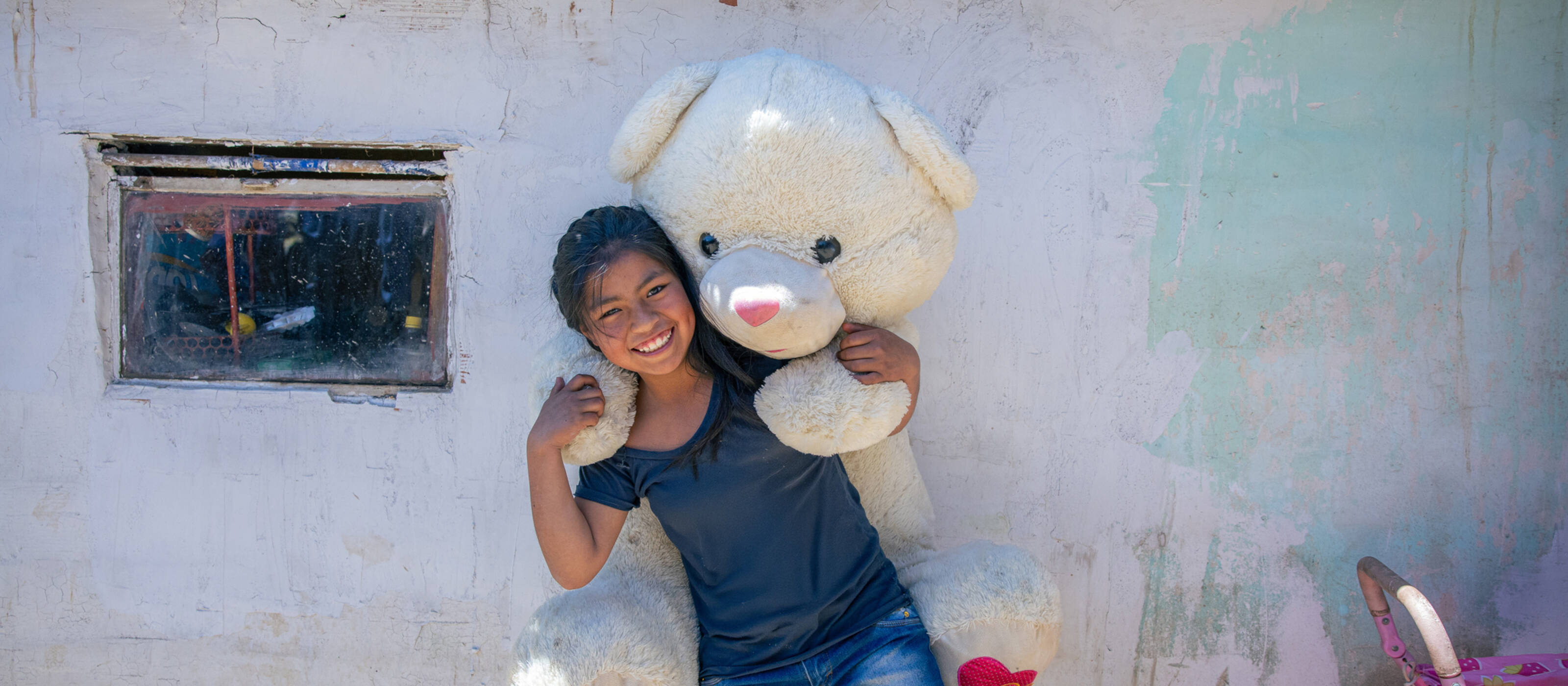
Header image: Dyana kann dank der Unterstützung von Caritas und den Projektpartnern wieder lachen. © Pablo Quiroga/Yamil Antonio