

Better living conditions for people fleeing violence – EUROPANA VII
Overview
Migration; Humanitarian Aid
898'251 swiss francs
01.06.2026 - 31.05.2027
Venezuela, Colombia, Peru, Ecuador
25,310 people, especially women, children, indigenous people, people with disabilities, elderly people, and internally displaced persons, as well as people in need from host communities
P260036
SDC, EU*



*This is funded/co-funded by the European Union. Its contents are the sole responsibility of Caritas Switzerland and do not necessarily reflect the views of the European Union.
Project in detail
Since the crisis began in Venezuela, South America has been in the grip of an ongoing migration crisis. Up to 8 million Venezuelans have left their homeland. Despite recent developments, the country remains in the throes of a deep economic and socio-political crisis. Beyond Venezuela, the humanitarian situation in Colombia, Ecuador and Peru forms part of a deeply intertwined crisis of displacement and migration across the region, marked by protracted armed conflicts (Colombia), fresh outbreaks of violence (Ecuador) and shifting mobility patterns (Peru).
The sheer number of internally displaced persons (over 7 million people in Colombia alone) is overwhelming national institutions. Drastic cuts to humanitarian funding – 40% at regional level, and up to 100% at local or national level – are leaving millions of people without food security, healthcare or protection from violence. Displaced persons and refugees are living in precarious conditions, often without shelter or a source of income.
The situation is compounded by the global fallout from the wars in Ukraine, Iran and the Middle East, pushing up prices even further and/or disrupting the supply of essential imports, such as fertiliser.
The regional project aims to improve the living conditions of people in need in Colombia, Ecuador, Peru and Venezuela.
It addresses critical gaps in humanitarian aid and improves the coverage of basic needs, particularly in the areas of food security and access to water. It provides support for the integration of vulnerable refugees in host countries and ensures they are informed about their rights and how to access them. The protection of migrants is enhanced through awareness-raising campaigns on both the conditions they face and the risks of migrating.
Internally displaced persons, particularly women, children and young people, indigenous communities, people with disabilities and elderly people, are the target groups of the project’s activities.
We improve the living conditions of the internal and international migrants that we support, enabling them to meet basic food, shelter and healthcare needs.
We provide cash (cards) – allowing those in need to choose what they require most urgently – as well as food parcels or vouchers and prepared meals. The combination of financial support and direct food aid enables individuals and families to gain social and economic security. For migrants in transit, direct aid provides protection against human trafficking, violence or assaults.
Furthermore, shelters along the migration routes, combined with targeted advice on their rights, help migrants to better protect themselves and integrate into society.
Further projects Commitment to a world without poverty

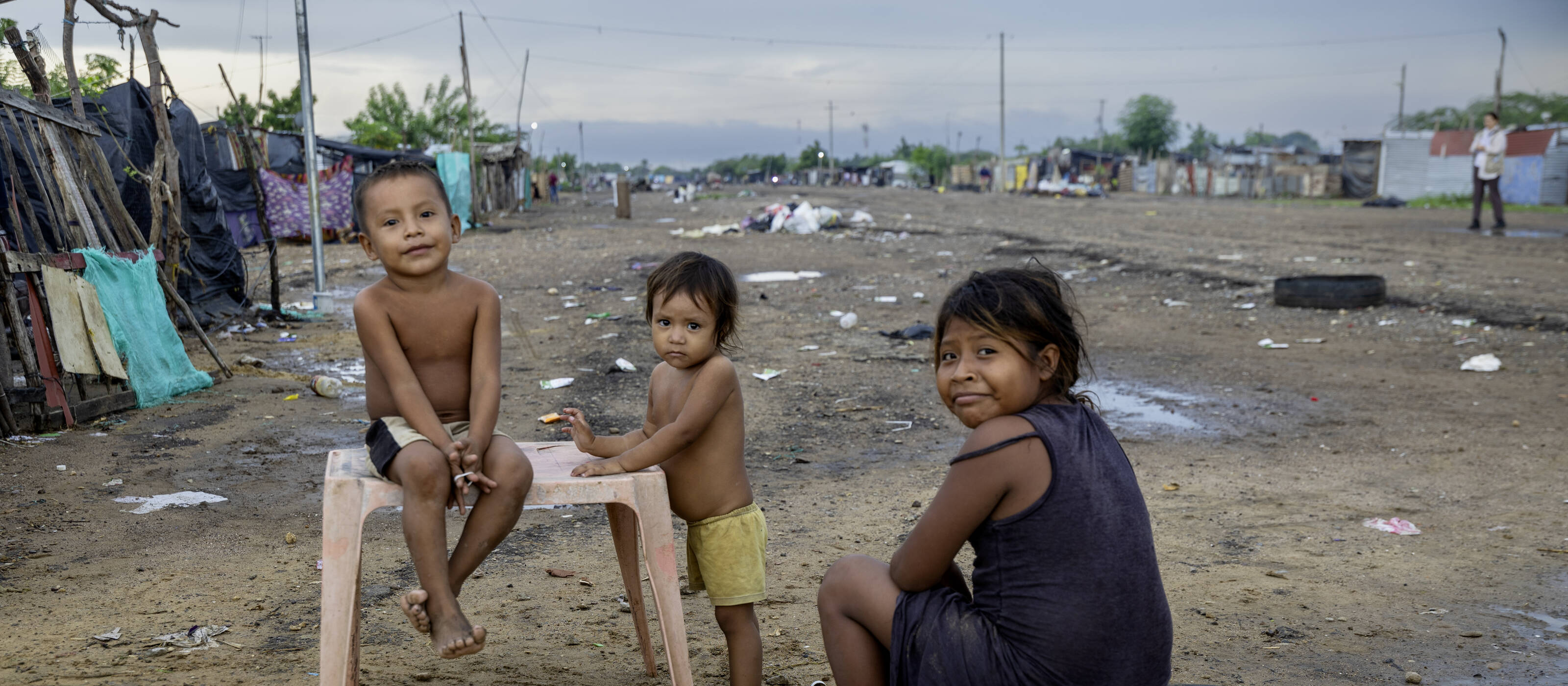
Header image: Children are among the groups most at risk. © Reto Albertalli