

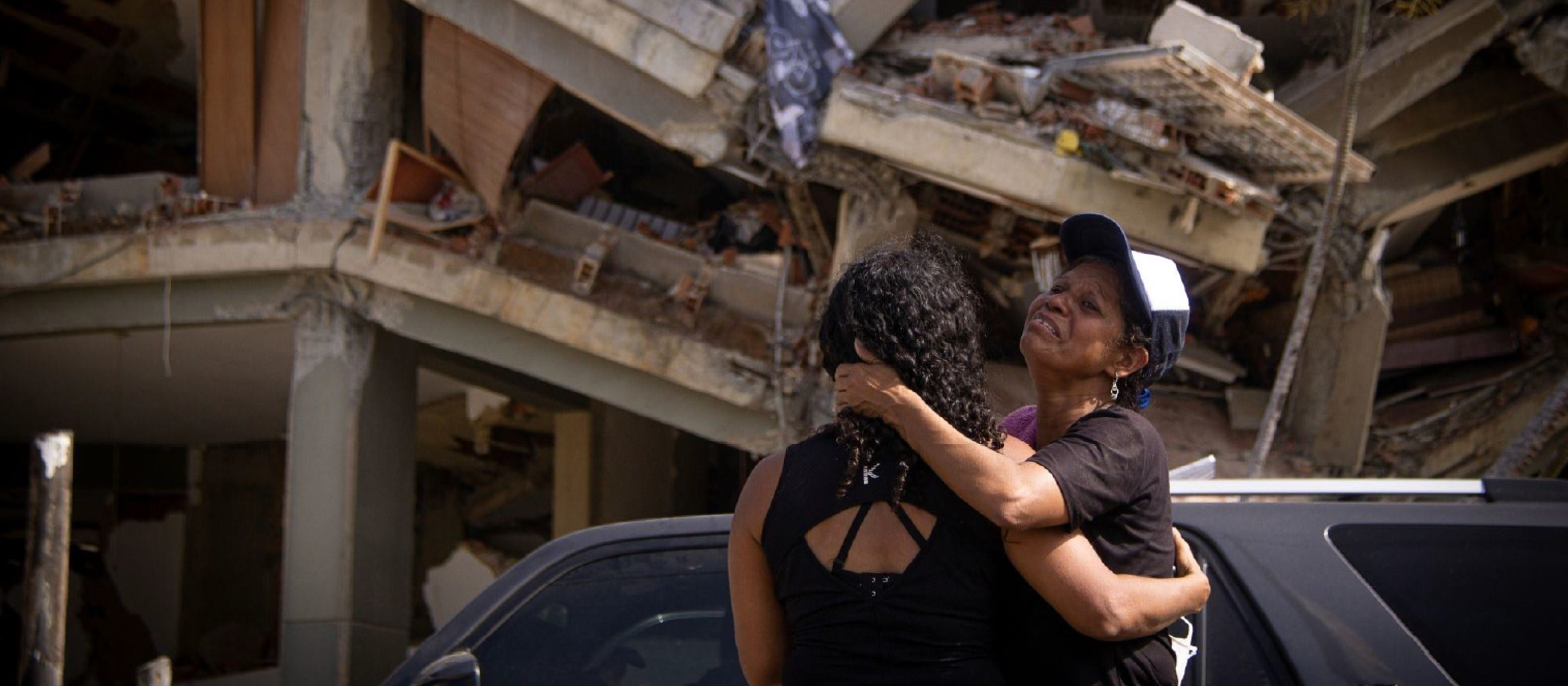
Emergency assistance after two severe earthquakes
Two severe earthquakes have left thousands of people in Venezuela in urgent need of assistance. Together with Jesuit Refugee Service Venezuela, Caritas Switzerland provides relief kits, psychosocial support, protection services and legal counselling.
Overview
Emergency response
1'090'517 swiss francs
15 July 2026 to 31 May 2027
Metropolitan area of Caracas (Distrito Capital) and the states of La Guaira and Miranda, Venezuela
Vulnerable earthquake-affected people and households, including women, children, older people and people with disabilities
P260042
Swiss Solidarity

Project in detail
On 24 June 2026, Venezuela was struck by two consecutive earthquakes measuring 7.2 and 7.5 in magnitude. By 24 August, more than 6,500 people had lost their lives, over 226,690 had been injured and around 25,000 had been left homeless. The north-central region was particularly severely affected.
Homes and public buildings collapsed or sustained extensive damage. Hospitals, schools, transport routes, electricity and water supplies, and telecommunications infrastructure were also severely affected. The disaster struck a country already facing a protracted humanitarian crisis marked by economic decline, inflation, food insecurity, limited access to healthcare and displacement.
Caritas Switzerland supports the emergency response together with Jesuit Refugee Service Venezuela. The project focuses on the metropolitan area of Caracas and the states of La Guaira and Miranda, prioritising women, children, older people and people with disabilities. Activities are coordinated with affected communities, local leaders and humanitarian coordination mechanisms.
The project provides timely emergency assistance to people affected by the earthquakes. It addresses urgent needs for essential household items while offering psychosocial support, protection services and legal counselling.
Rapid needs assessments guide the response and help identify people facing the greatest risks. Inclusive and conflict-sensitive approaches ensure that women, girls, children, older people and people with disabilities receive appropriate support.
The project follows a community-led approach that emphasises dignity and participation. Assistance is planned and delivered in close coordination with affected communities so that it remains relevant, timely and accountable.
A total of 2,017 relief kits will be distributed, benefiting approximately 3,747 people. The kits contain blankets, sleeping mats, hygiene supplies and lamps or torches. Women and adolescent girls receive dignity kits with menstrual hygiene and personal care items, while young children receive age-appropriate hygiene products.
Community-based listening spaces provide psychological first aid to approximately 750 people through individual and group sessions. Psychosocial case management is available for 35 people with specific protection needs. A further 520 children and adolescents take part in structured activities that help them express emotions, reduce stress and regain a sense of safety.
Legal information sessions reach 400 people, while 100 people receive individual legal counselling. In addition, 40 frontline responders take part in practical sessions on stress management, emotional regulation, peer support and burnout prevention.
Further projects Commitment to a world without poverty

Header image: © JRS Venezuela