

Ukraine: Investing Despite Uncertainty
REMARKET Insights | A joint expert article by Caritas Switzerland and Raiffeisen Bank
The full-scale war has changed what investment means for Ukrainian businesses. Companies are investing not only to grow. For some, investment is about adapting production to new conditions; for others, it means improving energy resilience, automating processes, addressing labour shortages or meeting the requirements of new buyers.
These needs are different and cannot be addressed through a single financial instrument. One business may need a relatively small investment boost, another a loan for modernisation, while another may benefit from bank financing combined with additional support that reduces the financial burden of the investment.
Despite these different starting points, many businesses face the same question: can they afford to invest now?
Lending is recovering, but investment remains a difficult decision
Ukraine’s banking system has shown considerable resilience. According to the National Bank of Ukraine, the net hryvnia corporate loan portfolio grew by around 36% in 2025. But for a business, access to finance is about more than receiving a positive credit decision.
The real question is whether the company can afford the cost of the loan, meet the bank’s requirements, maintain sufficient liquidity and service the debt until the investment begins to generate returns.
Business surveys point to the same constraints. In 2025, 67% of surveyed SMEs identified high interest rates as one of the main barriers to accessing finance, 43% cited collateral requirements, 31% complex procedures and 26% the lack of financial products suited to their needs.
During the war, there is another important factor: time. Once a loan is approved, a business still needs to purchase the equipment, arrange delivery, install and commission it and, in many cases, train staff. During this period, the company already has financial obligations, while the new asset is not yet operating or generating additional income.
This gap between receiving financing and seeing the investment begin to deliver results can lead businesses to postpone even economically sound projects.
Banks face the same uncertainty from a different perspective
Investment lending during wartime is challenging not only for businesses, but also for banks. They need to support economic activity while protecting depositors’ funds and maintaining the quality of their loan portfolios.
When assessing an investment project, Raiffeisen Bank Ukraine therefore looks beyond financial statements. Cash flows, markets, sector and regional risks, collateral and the structure of the transaction all matter, as does whether the investment is likely to make the business more efficient and resilient.
“The bank’s role is not only to finance a project, but also to ensure that the loan remains manageable for the borrower and contributes to the company’s development,” Raiffeisen Bank notes.
This type of assessment is intended to ensure that financing supports the development of the business rather than creating a debt burden it cannot sustain.
Why partnership mechanisms matter
Banks and businesses face a shared practical challenge: how to make economically viable investments happen when risks have increased and payback periods have become less predictable.
Different partnership mechanisms address different parts of this challenge. Credit guarantees can reduce part of the risk for banks, interest-rate subsidies can lower borrowing costs, technical assistance can improve a company’s investment readiness, while post-investment cash-back can reduce the financial burden on a business once the investment has been made.
The idea is not to replace commercial finance with grants. It is to use targeted support to reduce a specific barrier and help a viable investment move forward.
Access to Finance: a partnership approach to an investment barrier
One example is the Access to Finance (A2F) component of REMARKET, a programme implemented by Caritas Switzerland together with its partners. The component is delivered in partnership with Raiffeisen Bank Ukraine.
The model combines bank financing with a limited investment incentive provided through REMARKET.
The business identifies its investment need, applies directly to the bank and goes through the bank’s full assessment process. If approved, it receives a loan to invest in fixed assets. Once the assets have been purchased, delivered and put into operation, and the investment has been verified as meeting the programme requirements, the business may receive a cash-back grant of up to 10% of the loan amount, capped at CHF 10,000.
Raiffeisen Bank independently assesses the borrower and the investment project and makes the lending decision. The business takes on the loan obligation and remains responsible for implementing the investment and repaying the financing. REMARKET neither provides the loan nor guarantees that financing will be approved.
The cash-back mechanism addresses a specific point in the investment cycle: after the investment has been completed and verified. By reducing the effective cost of the investment and supporting the company’s liquidity after the investment has been made, it can help the business through the period before the new asset begins to generate returns.
At the same time, cash-back cannot make a weak project viable, nor does it remove the bank’s credit risk. It is designed for investments that already have a clear economic rationale and have passed an independent bank assessment.
Investment will shape future competitiveness
Ukraine’s recovery will depend not only on the scale of international assistance or government programmes. It will also depend on whether private businesses can continue investing in productivity, quality, energy efficiency, jobs and access to new markets.
This is where partnerships between the financial sector and development programmes can have practical value. They do not replace the market. They can help viable investments move forward when a specific barrier would otherwise hold them back.
Ukraine’s economic resilience depends not only on whether businesses can keep operating today. It also depends on whether they can invest in how they will operate tomorrow.
Sources and References
- NBU Annual Report 2025.
- State Tax Service of Ukraine (Jan–Apr 2026 statistics).
- World Bank RDNA4 (February 2026).
- Raiffeisen Bank Ukraine (REMARKET A2F programme information).
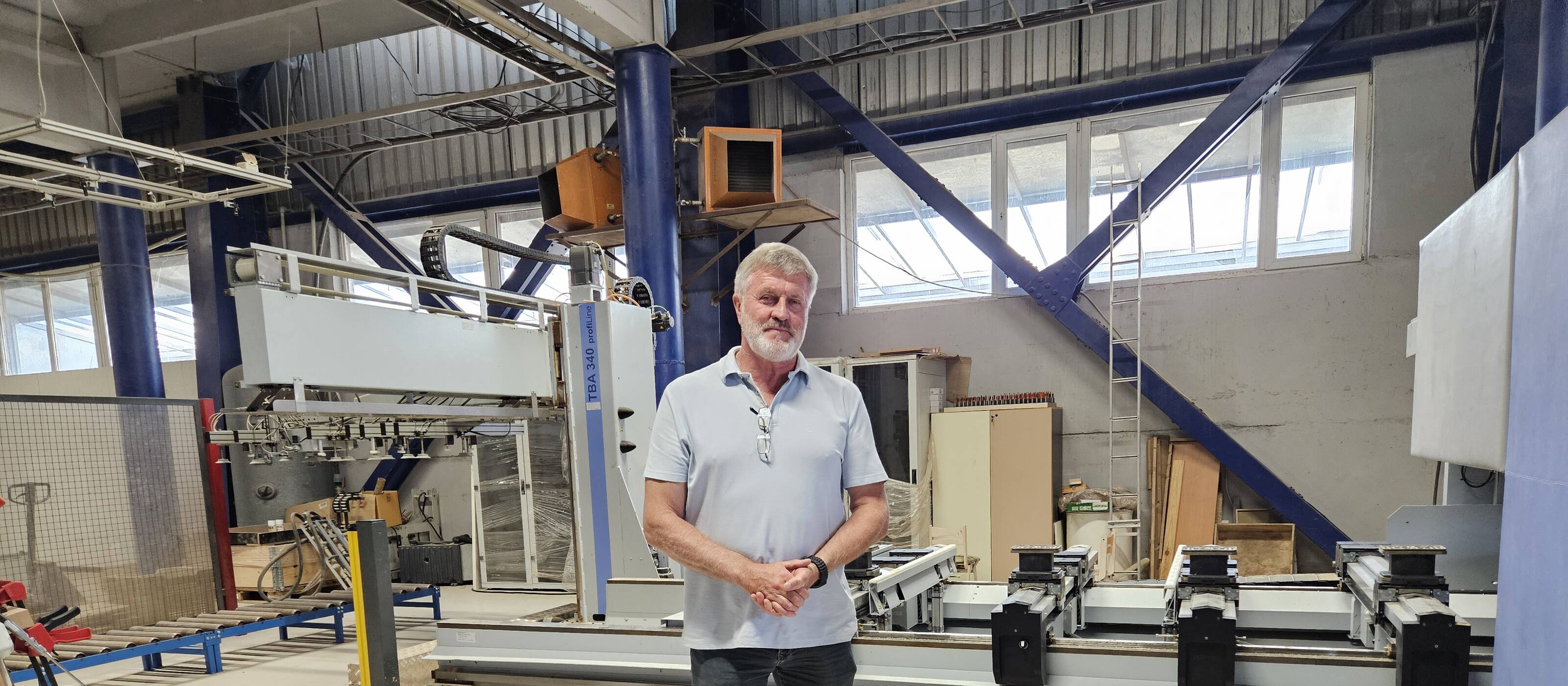
Header image: Ukrainian Business Owner in Odesa © Sandra Papi