

Sustainable Markets and Agribusiness Competitiveness (SMACplus) Project
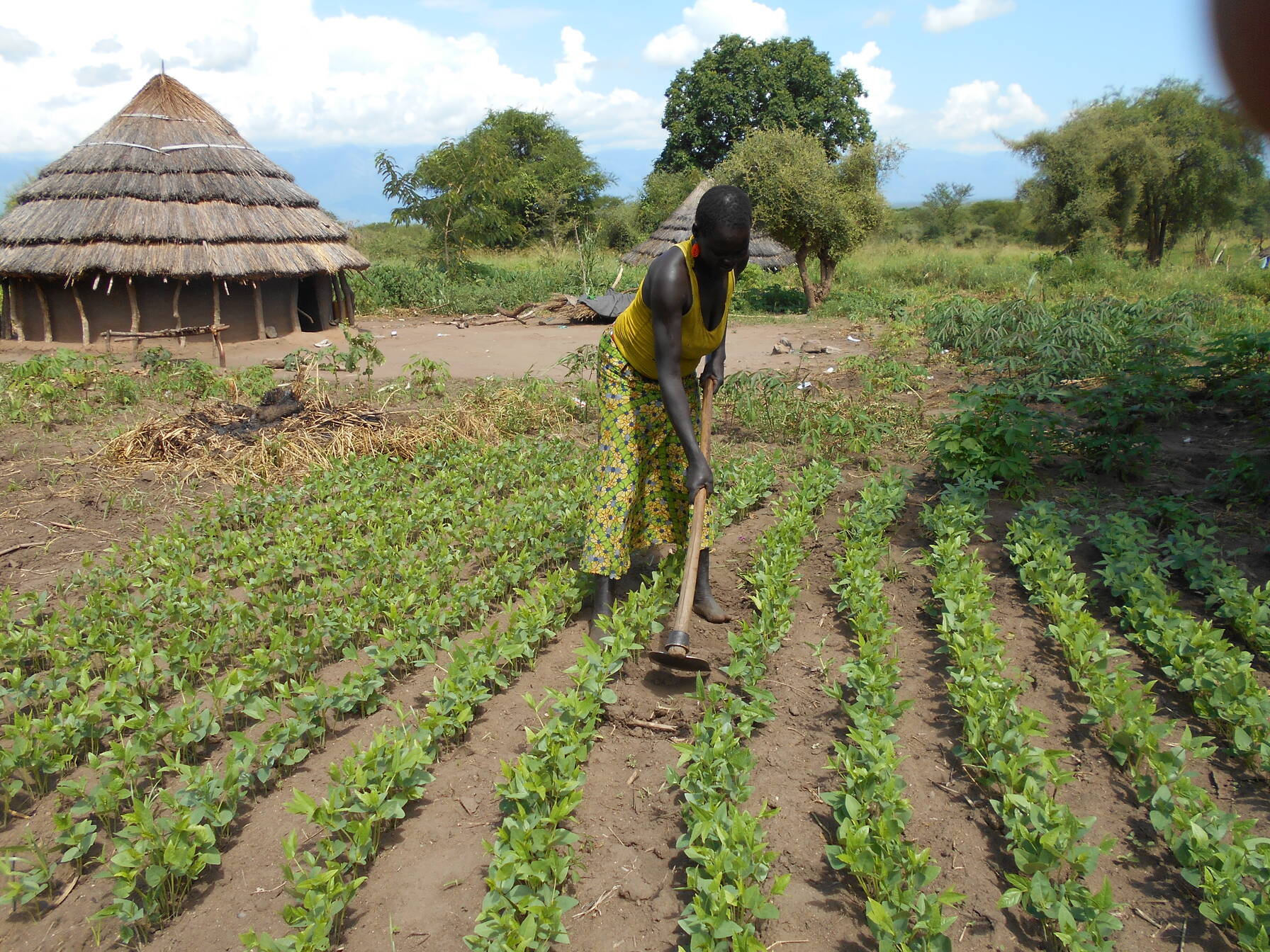
More than 70% of the population in South Sudan lives from agriculture. However, weak market systems, low yields, and high crop losses keep many farming families trapped at the bottom of the value chain. At the same time, the country remains heavily dependent on food imports from neighboring countries.
With the SMACplus Project, Caritas along with its local strategic parnters, is strengthening agricultural production and promoting adaptation to ever growing climate changes. We are also developing functioning market systems, promoting private sector participation, and supporting improved policy frameworks – for greater food security and resilient communities.
Project Facts and Figures
Income
15.11.2025 - 14.11.2029
10'81'406 Swiss Francs
Central Equatoria (CES) and Eastern Equatoria (EES) States
15'000 smallholder farmers with targeted inclusion of women, youth, and marginalized groups
EU and SDC



*This is funded/co-funded by the European Union. Its contents are the sole responsibility of Caritas Switzerland and do not necessarily reflect the views of the European Union.
SMACplus Project in Detail
Over 70% of the population in South Sudan depend on agriculture for their livelihoods. However, weak market systems and underdeveloped relationships between market actors are hampering economic development and compromising food security.
Smallholder families achieve low yields because they lack access to high-quality inputs, seed systems, and climate-adapted farming methods. Post-harvest losses exceed 25%, leaving many farmers at the bottom of the value chain, while the country remains heavily dependent on food imports from neighboring countries.
Ongoing political instability, institutional deficits, and the overexploitation of natural resources further exacerbate these challenges and contribute to the displacement of large sections of the population and continued dependence on humanitarian aid.
With the SMACplus Project, Caritas is strengthening the production capacities of smallholder farmers, improving their adaptation to climate change, and increasing their incomes. At the same time, market systems are being further developed, the private sector is being integrated, and political framework conditions are being improved – for greater food security and resilient communities.
The Market System Development (MSD) approach focuses on cooperation with the private sector, including honey production, the seed sector, and horticulture. The aim is to increase production volumes, produce high-quality seeds, and promote climate-friendly farming methods.
In addition, the project supports fiscal reforms, strengthens natural resource management, and promotes peacebuilding at the local level. Overall, the SMACplus Project reaches around 15'000 smallholder farmers, strengthens 145 businesses and 100 farmer groups, and contributes sustainably to agricultural development in the target regions.
Around 7'500 households will build capacities for sustainable resource management and strengthen local governance. Guided by Caritas' Triple Nexus approach, the project incorporates mechanisms and shock absorbers that enable rapid response to emerging needs. In cases of natural disasters, emergency suppliesand cash support can be distributed to support communities, ensuring continuity of livelihoods and contributing to long-term agricultural development and food security.
In its International Cooperation Programme Strategy 2025–2028, Caritas Switzerland has selected the Market System Development (MSD) approach as a priority to combat poverty. The MSD approach is a development framework designed to make market systems more inclusive and beneficial for people living in poverty.
Rather than directly improving what market actors produce or deliver, MSD focuses on identifying and addressing the underlying causes of market underperformance—the rules, functions, incentives, and relationships that prevent a system from serving the poor effectively. By removing barriers, strengthening market functions, and supporting actors to take on sustainable roles, MSD aims to stimulate scalable, systemic, and long-term change in markets that matter most to the poorest and most vulnerable communities.
Vulnerable people at all levels, including consumers, producers, and employees, can benefit from improved market functions. Inclusive markets can thus help smallholder farmers, small entrepreneurs, and vulnerable employees to increase their income through increased production and sales, cost reduction, and better working conditions.
Since its founding in 1901, Caritas Switzerland has remained committed to supporting the most vulnerable populations around the world. In South Sudan, the organization has been active for more than 50 years, responding to evolving humanitarian and development needs. In 2006, Caritas Switzerland established an office in Torit, the capital of Eastern Equatoria State, to implement programmes in food security, water, and education for crisis-affected communities. In early 2022, a coordination office was opened in Juba, which has since become the organisation's main operational hub in the country.
Further information

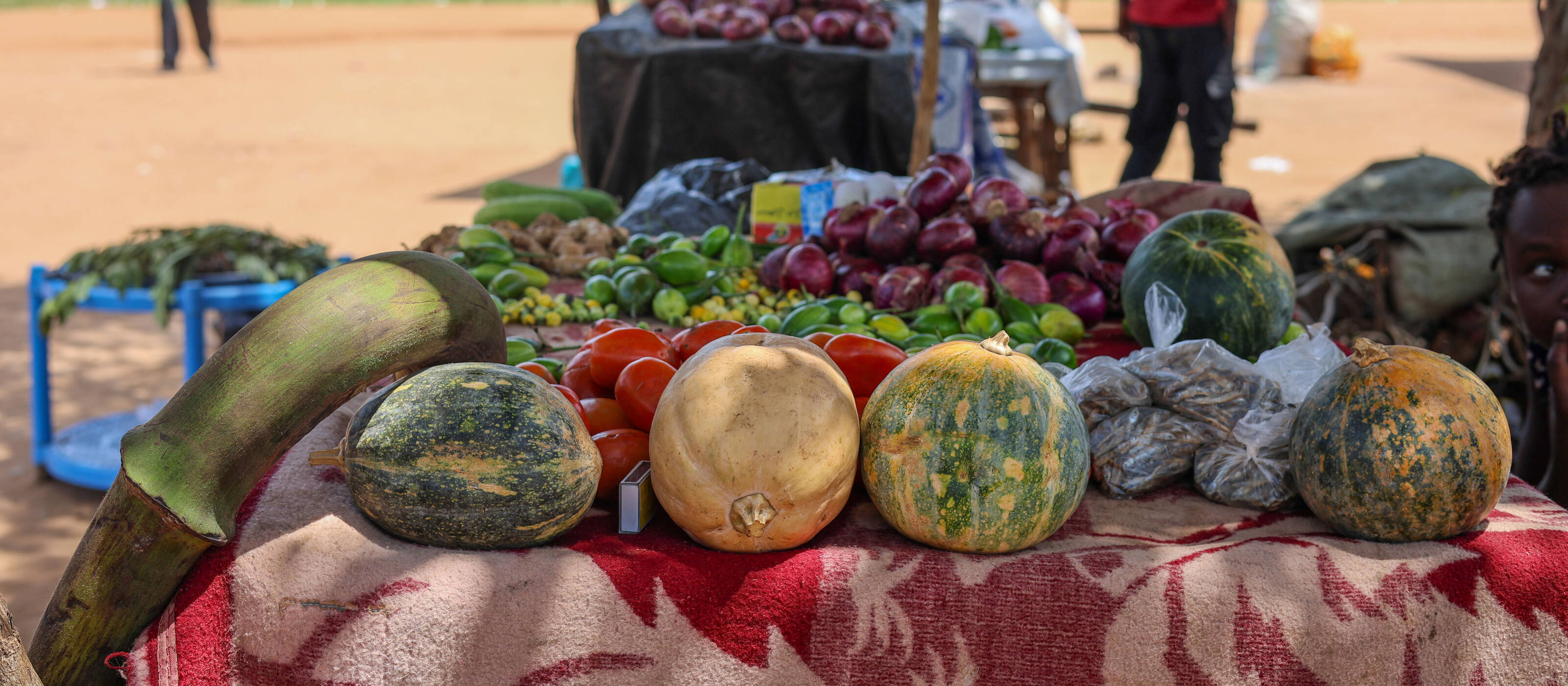
Header image: Market stalls at Gorom Camp in Juba, South Sudan © Adam Ibrahim