

Strengthening Market Actors and Communities (SMAC) Projectfinished
Overview
Income
1'347'970 swiss francs
01.08.2023 - 30.04.2025
South Sudan; Base in Juba with frequent travel to the locations (priority states Eastern and Central Equatoria)
The ultimate beneficiaries of the project are poor households (mostly female and male smallholder farmers) who will be able to achieve higher and more sustainable incomes because of the project’s activities.
P230009
SDC

Project in detail
Since its independence in 2011, South Sudan has undergone persistent crises and conflicts, leaving the country significantly underdeveloped and in a state of extreme fragility. Though the agrifood sector is the most important source of livelihood in the country, it is severely underperforming. The production is small, diversification is poor and the impacts of climate change on the production are already observed too. Beyond production, the economy of South Sudan is profoundly disrupted, the markets limited, and both depend on the NGOs as employers and customers, respectively.
Due to conflict, the transformation of products has become rarer, and trade has be-come dangerous and costly. Further the access to markets is often lacking and the purchasing power of the consumers is low. Poor access to finance constrains the performance and growth of companies. The ambitions of CACH in South Sudan which are outlined in the country strategy are to create income opportunities, increase food security and build resilience to climate change. These can be achieved by the adoption of the market systems development (MSD) approach due to its ability to create sustainable change and reduce dependency on external aid.
The beneficiaries of the project are poor households, mostly women and men smallholder farmers, who will be able to achieve higher and more sustainable incomes with the project’s activities. In addition, through this project, CACH aims to generate and share knowledge, learning and build local capacity on the effective implementation of the market systems development (MSD) approach in fragile and conflict afflicted situations (FCAS). This is expected to benefit future CACH investment in South Sudan and other similar contexts, as well as to position CACH as a key development partner at the forefront of systemic and sustainable approaches on the humanitarian-development nexus (HD-nexus) and innovative engagements with the private sector.
The MSD approach has a large importance because direct payments or provision of services are supplemented or replaced by targeted investment in market development; this will contribute to a sustainable improvement in the livelihoods of the poorest, especially in mid- and long-term interventions. Poor households will be reached by the project through private sector companies, which will also benefit from the project – these include both
for-malised, more established businesses most likely headquartered in Juba (whom the project will directly partner with) and micro/small enterprises and cooperatives across the country, which will be better linked to markets and increase their performance because of project supported innovations. The project will proactively scope and engage with and target women-led businesses and businesses which disproportionately employ and/or trade with women.
Further projects Commitment to a world without poverty

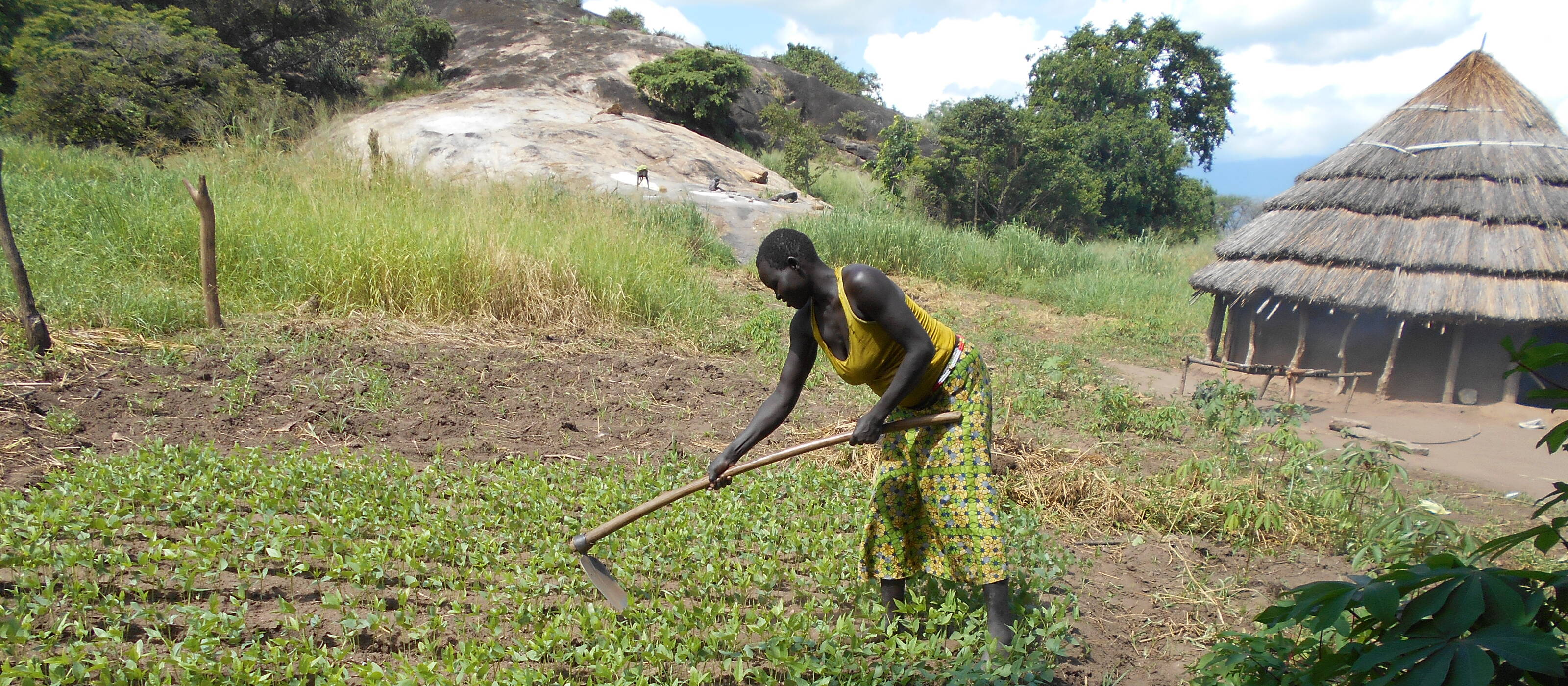
Header image: Agriculture is the most important economic sector in South Sudan. © zVg.