Emergency Response to the June 2026 Earthquakes
Two severe earthquakes have killed thousands of people in Venezuela and caused extensive damage to homes and essential infrastructure. Caritas supports vulnerable families with food, safe water, healthcare, psychosocial assistance, protection and help to rebuild their livelihoods.
Overview
Emergency Response
48'039 swiss francs
01.07.2026 – 31.12.2026
La Guaira, Capital District, Aragua, Carabobo, Miranda
Vulnerable earthquake-affected individuals and households, including
women, children, the elderly, people with disabilities
P260041
SDC


Project in detail
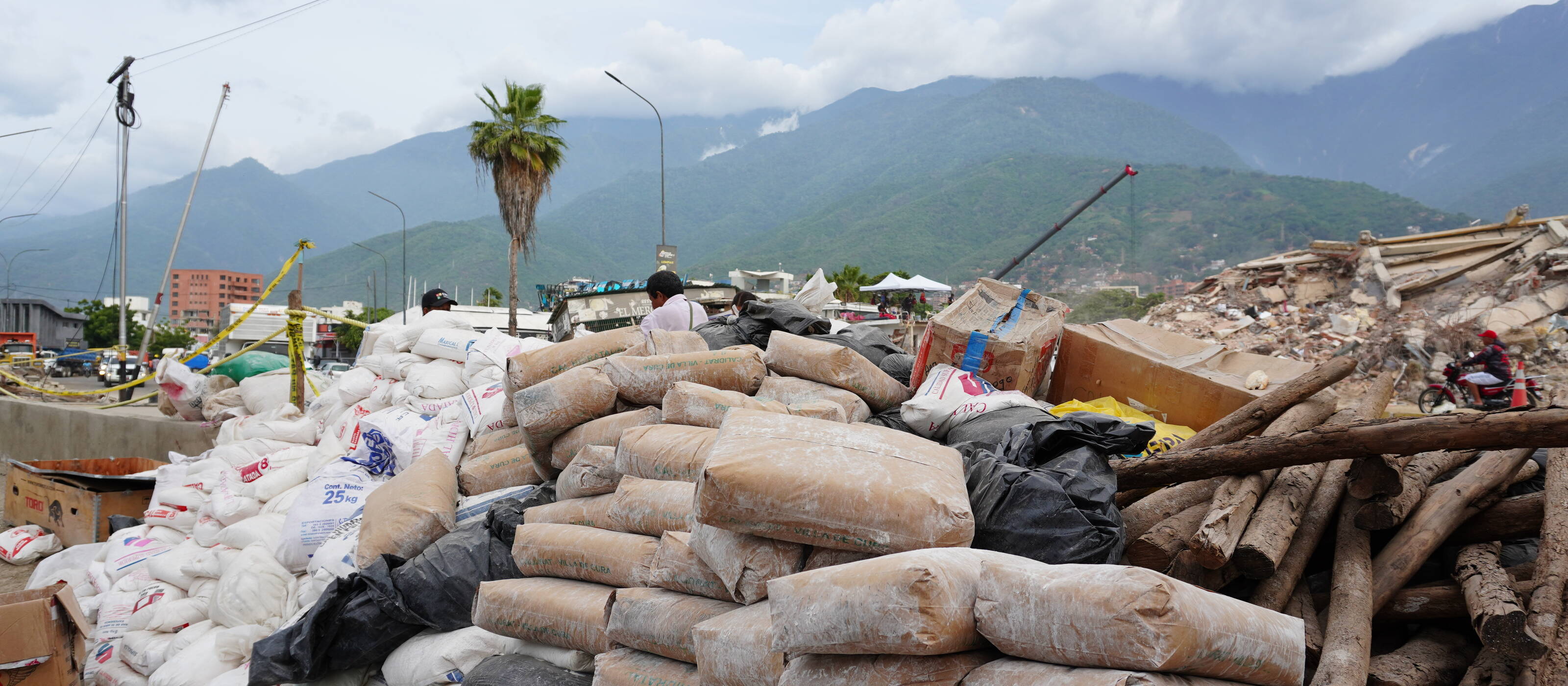
On 24 June 2026, two consecutive earthquakes of magnitude 7.2 and 7.5 struck Venezuela, causing the country's most severe seismic emergency in more than six decades. By 3 August, more than 6,125 people had died, over 60,000 had received hospital treatment and around 18,000 had been left homeless. The north-central states of La Guaira, Capital District, Miranda, Carabobo and Aragua were among the areas most affected. Homes and public buildings partially or completely collapsed. Hospitals, schools, transport routes, electricity, water supply and telecommunications sustained extensive damage. Lost income and interrupted economic activity further increased the need for humanitarian assistance. The earthquakes hit a population already affected by a prolonged humanitarian crisis marked by economic decline, inflation, deteriorating public services, food insecurity, limited healthcare and displacement. These pressures have weakened households' ability to cope, while years of underinvestment have constrained national response systems. Caritas Switzerland supports the emergency response with food, water, psychosocial assistance and hygiene services for particularly vulnerable people.
The project provides humanitarian assistance to families affected by the earthquakes. It addresses urgent needs for food, health, nutrition, shelter and safe water while supporting the recovery of livelihoods and reducing protection risks.Rapid needs assessments guide an integrated, community-based response. Caritas coordinates closely with affected communities, local leaders, authorities and humanitarian coordination mechanisms. This ensures that women, children, older people, persons with disabilities and other particularly vulnerable groups are reached and that immediate relief is linked with early recovery and longer-term resilience.
Families receive food baskets, cash for food and basic necessities, and meals through community kitchens. Hygiene and sanitation kits, water distribution, filters and 200 water tanks with pumps improve access to safe water. Small repairs to homes and community spaces, kitchen kits and bedding help families leave emergency shelters and return safely. Medical consultations and medicines support physical health. Recreational activities for children and adolescents, psychological first aid, active-listening spaces and group sessions provide psychosocial support. Nutritional supplements help young children, pregnant women and breastfeeding mothers recover from acute malnutrition.Cash-for-work activities support light road repairs and debris removal, while seed capital helps small businesses restart. People facing protection risks are referred to specialised services. The project is managed by Caritas Switzerland's office in Colombia and implemented with Caritas Venezuela, whose nationwide presence and strong community trust enable a rapid and accountable response.