Disaster risk management and strengthening of the municipalities along the Coroico riverfinished
Overview
Climate
1'817'199 Swiss francs
01.11.2022 - 30.04.2026
5 districts in the catchment area of the Coroico River (Coroico, Caranavi, Guanay, Teoponte, Zongo)
Affected families in the catchment area, including families that are directly threatened by floods and/or suffer badly contaminated waterways, farmers and other needy families.
P220077
Project in detail
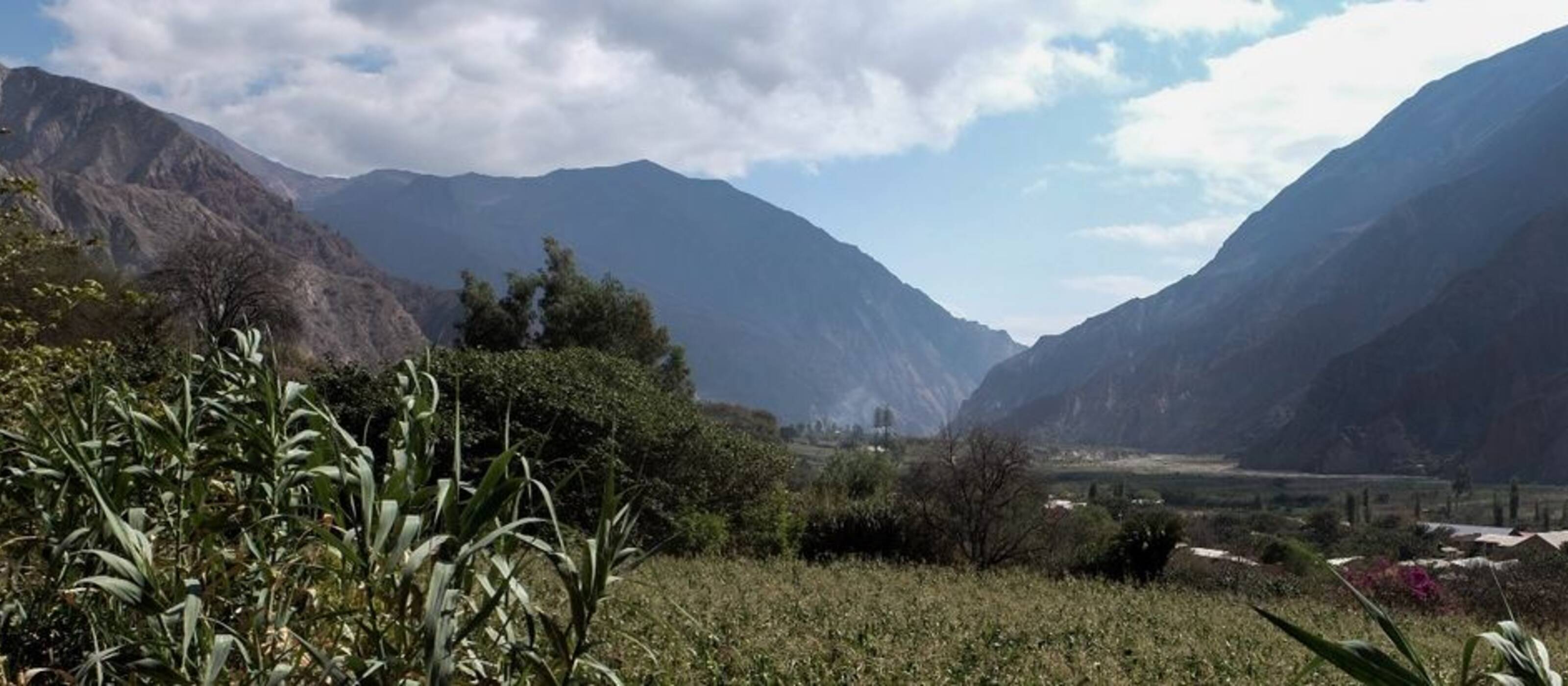
In 2019, the percentage of the Bolivian population living below the national poverty line increased again for the first time by several percentage points to 37,2 per cent. It can be assumed that this deteriorated further as a result of the Covid-19 crisis. It makes Bolivia one of the poorest countries in Latin America, which also has to struggle with massive environmental problems. Unusually long dry periods and heavy rainfalls are noticeable effects of climate change, which further increase the pressure on water resources. The watershed of the Río Coroico covers an area of 5'356 km2 and is in the La Paz Department. According to the last available census of 2012, 59'996 people live there, of whom 30'824 (51.4%) are in poverty. They consist mainly of indigenous communities. In the entire water catchment area, there is a problem of agrochemicals being used inappropriately, which leads to pollution of the environment. In addition, there is mostly illegal gold prospecting. It is difficult to monitor and leads to heavy contamination of the Río Coroico with mercury and other chemicals. In addition, the wastewater of the densely populated settlements is discharged untreated into the Río Coroico. Another problem is solid waste pollution, for whose disposal the local waste disposal system lacks the capacity. Floods, landslides and mudslides repeatedly and increasingly endanger the communities living close to the river. It regularly costs lives and leads to the loss of livelihoods.
The resilience of the inhabitants of the catchment area of the Coroico river to the impacts of climate change is strengthened through integrated watershed management, which improves the social, economic and ecological conditions of the local population.
The project contributes to improving the livelihoods of the local population through the participatory implementation of measures designed to adapt to climate change, to disaster risk reduction, and to increase resilience. This strengthens the inter-institutional platform for the catchment area, particularly the development of professional, administrative and management capacities. The district administrations are professionally supported in the integration, implementation and updating of the strategic master plan for the watershed. There will be greater representation of women in leadership positions in the professional section. Efforts will also be made to improve the water and environmental management of the catchment area. This will be done with measures of adaptation to climate change, better protection of water sources, raising awareness about an environmentally sound use of agrochemicals, methods for organic farming as well as the practice of responsible mining. In addition, the supply of drinking water will be improved. Municipal protected areas are established in the water catchment area, as well as local plans for waste management. Finally, the disaster risk management units of the local administrations will be strengthened, and disaster risk reduction will be integrated into the planning instruments of the municipalities.
The project works in Caritas Switzerland’s priority theme of «climate». Caritas Switzerland has developed an integrated approach that takes account of social, ecological, economic and institutional dimensions. Alongside the ecosystem-based adaptation to climate change through climate-resilient agricultural practices and the protection of natural resources, the resilience of the endangered population towards climate risks is enhanced.
Further projects Commitment to a world without poverty


The project is funded by:
- SDC