

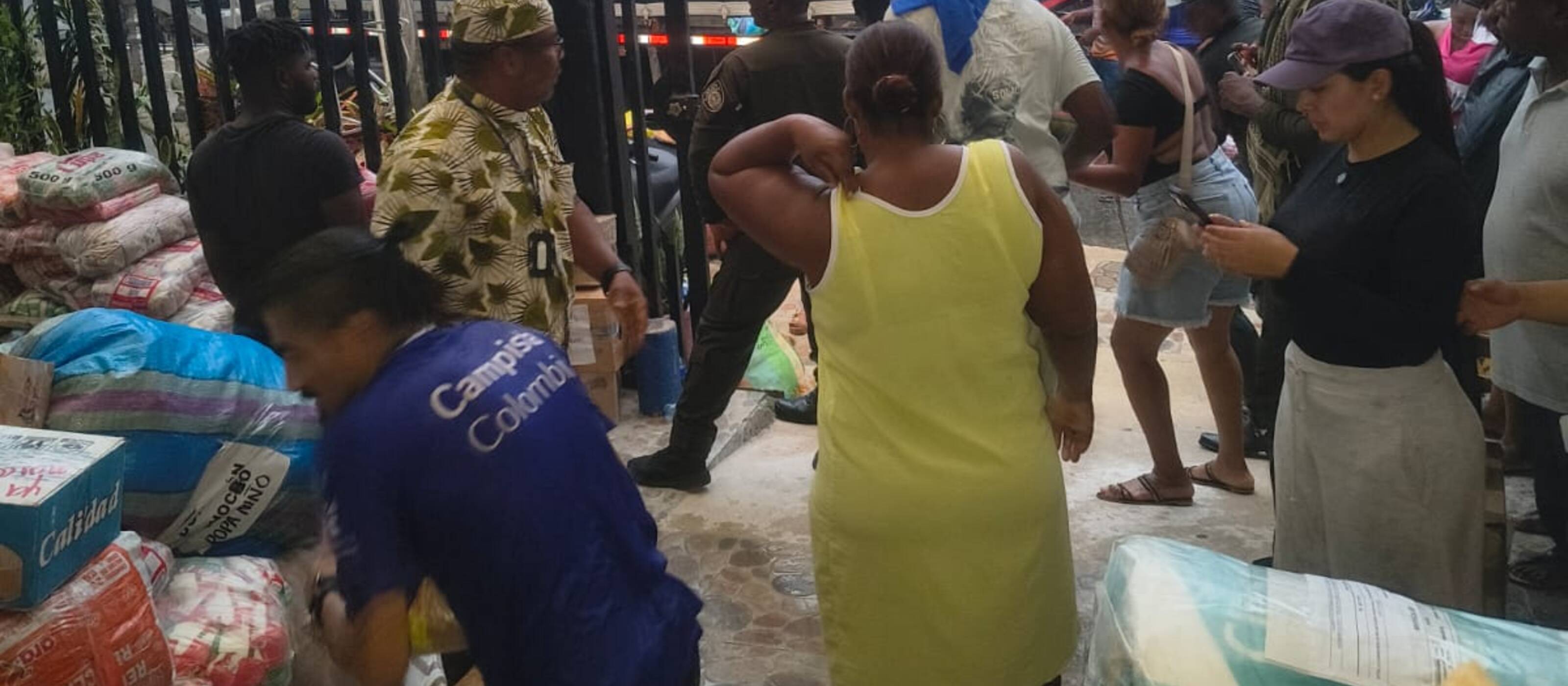
Emergency assistance after the August 2026 earthquake
The August 2026 earthquake caused widespread destruction in western and central Colombia. Together with Caritas Colombia SNPS, Caritas Switzerland supports around 15,000 vulnerable people with cash assistance, food, safe water, shelter and psychosocial support.
Overview
Emergency Response
150'000 swiss francs as part of a larger multi-donor Caritas Network project.
01.10.2026 - 30.09.2027
Chocó, Valle del Cauca, Risaralda and Caldas, Colombia
Vulnerable earthquake-affected people and households, including women, children, older people and people with disabilities
P260052
SDC

Project in detail
On 10 August 2026, a magnitude 7.4 earthquake struck western and central Colombia. More than 361,000 people were affected, 331 people lost their lives and over 210,000 homes were damaged or destroyed. Approximately 1.2 million people need humanitarian assistance.
Chocó, one of Colombia's poorest and most neglected departments, is among the areas most severely affected. Hospitals, schools, transport routes, electricity networks, water systems and telecommunications were extensively damaged. At the same time, interrupted economic activity and reduced income opportunities have further weakened the ability of households and communities to cope.
Caritas Switzerland supports the emergency response through its national partner Caritas Colombia SNPS. The Caritas network is present in all affected areas and works alongside communities, local leaders, authorities and humanitarian coordination mechanisms. The project provides assistance where local and regional solidarity and volunteer efforts have reached their limits.
The project provides humanitarian assistance to families affected by the earthquake. It addresses urgent needs related to food, health, nutrition, shelter and safe water while supporting the recovery of livelihoods and reducing protection risks. Around 15,000 people are expected to be reached.
An integrated approach ensures that people facing the greatest risks, including women, children, older people and people with disabilities, receive appropriate support. Rapid needs assessments guide the response and help adapt the assistance to changing local conditions.
The project combines immediate relief with early recovery and resilience building. Activities are implemented in close coordination with affected communities and local actors so that assistance is relevant, timely and accountable.
Further projects Commitment to a world without poverty

Header image: Aid in Colombia following the earthquake © Diözese Quibdo