

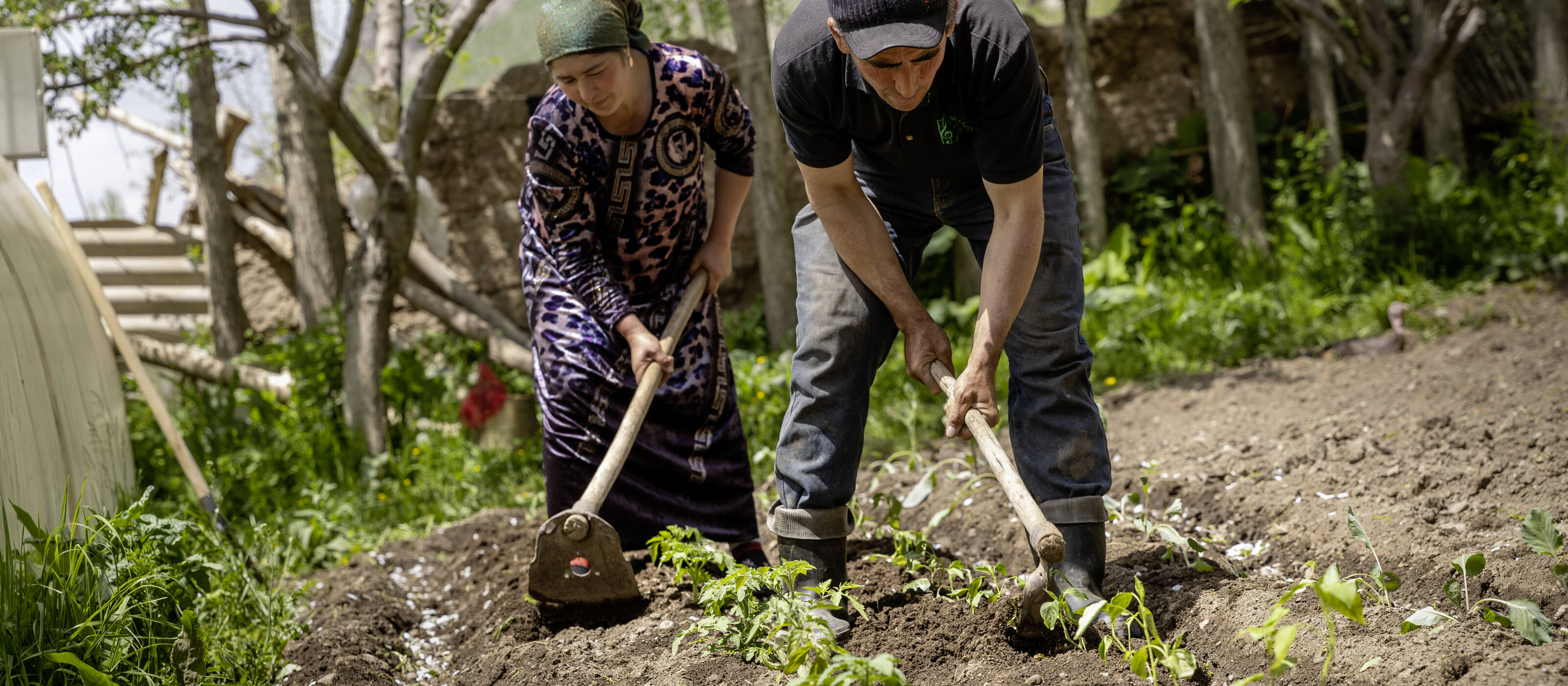
Agri-tech for youth smallholder farmers
Overview
Climate
430'822 swiss francs
01.12.2025 - 31.03.2027
Districts of Tajikistan
Rural population, district governments
P250053
WFP World Food Programme
Project in detail
Rural communities across Tajikistan face significant barriers to agricultural productivity and food security. With 65% of the population living in rural areas, farmers struggle with limited access to weather forecasting, agricultural advisory services, and market information. The existing infrastructure includes outdated Soviet-era machinery and basic telecommunications services that inadequately serve farming communities. Climate change and weather fluctuations compound these challenges, while poor digital accessibility restricts farmers' ability to access timely information for crop planning and risk management. Young farmers, who represent a growing demographic due to recent changes in seasonal migration patterns, particularly lack access to modern agricultural knowledge and market connections. These systemic gaps in information and technology access directly impact agricultural productivity and limit farmers' ability to adapt to changing environmental conditions.
The project establishes a comprehensive digital agricultural extension system through strategic technology deployment and institutional partnerships. The initiative will install 54 new information kiosks in rural community centers and agricultural departments, while modifying 30 existing kiosks to create a network of 84 digital access points nationwide. These kiosks will provide three core services: weather forecasts and climate-related agricultural advice, online marketplace functionality connecting farmers to suppliers, and individualized communication through SMS, USSD, and chatbot systems. Implementation involves collaboration with the Tajik Agency for Hydrometrology, Ministry of Agriculture, and international scientific institutions. The project includes training programs for a minimum of 200 young champion farmers who will serve as local technology advocates and knowledge multipliers within their communities.
The project will create measurable improvements in agricultural information access and market connectivity across participating regions. Each kiosk will offer three types of agricultural advice and connect farmers with three local suppliers, while establishing a subscriber base of ten farmers per community for regular information services. This infrastructure development supports the national priority of digitalizing government services while building local capacity for long-term system maintenance. The initiative contributes to economic growth and improved nutrition within rural communities by strengthening market linkages and providing climate-resilient farming guidance. Through partnerships with national institutions and the training of local champions, the project establishes sustainable mechanisms for agricultural technology support that will extend beyond the implementation period.
Further projects Commitment to a world without poverty


Header image: © Reto Albertalli